The best voice recorders for lectures make it easier to revisit explanations, capture details, and study without trying to write down every word. The models in this roundup cover straightforward dictaphones, voice-activated devices, and newer recorders with AI transcription or summarization features.
Before choosing, consider recording quality, battery life, storage, microphone performance, playback controls, and how easily files transfer to a computer or phone. Privacy and local recording rules also matter, especially in classrooms and other shared spaces.
Best 10 Voice Recorders for Lectures Picks for 2026
Best All-Around Value
EVISTR L357 64GB Voice Recorder

- 64GB storage with up to 4,660 hours at 32Kbps
- Noise reduction, adjustable gain, and voice activation
- Up to 32 hours of recording with USB-C transfer
Best For: Students and professionals seeking flexible, long-duration lecture recording
Best for AI Note-Taking

- Transcribes in 113 languages and creates smart summaries
- 128GB storage with up to 9,216 hours at 32Kbps
- One-button recording with encryption and wired OTG transfer
Best For: Users who want AI-generated lecture notes and summaries
Best for Maximum Storage

- Up to 9,800 hours of storage at 32Kbps
- Up to 100 hours of continuous recording
- Triple noise reduction with USB-C and OTG accessories
Best For: Long-term lecture archiving and extended recording sessions
Best Budget-Friendly Simple Option
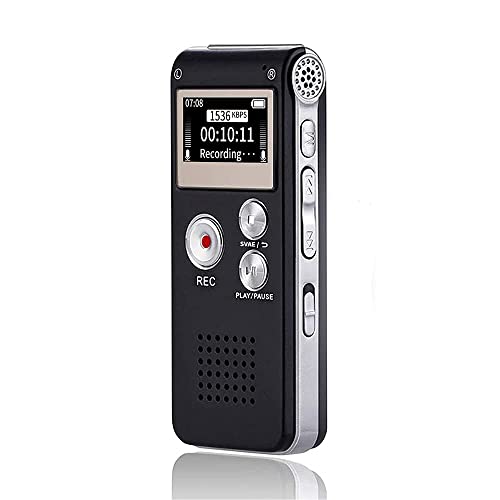
- Dedicated controls for simple recording and playback
- Voice activation and noise reduction for lectures
- Up to 30 hours of recording with 16GB storage
Best For: Casual users wanting an uncomplicated lecture recorder
Best High-Capacity Pick
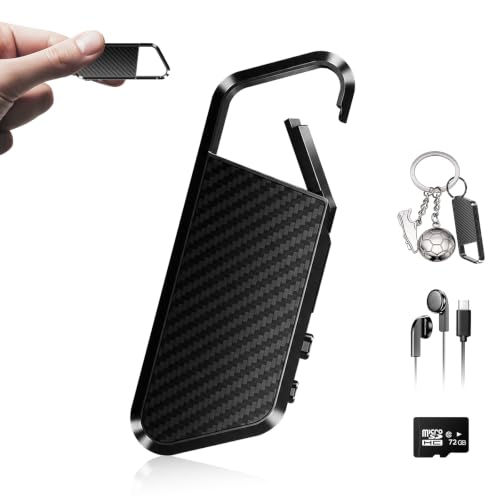
- 72GB storage and up to 10,860 hours stated capacity
- DSP 6.0 noise reduction for busy environments
- OTG transfer to compatible phones and tablets
Best For: Long-term lecture and meeting audio storage
Best Feature-Rich Pick

- 128GB storage with multiple MP3 and WAV formats
- Six voice-activation sensitivity levels
- Password protection, bookmarks, and folder organization
Best For: Organized lecture recording and review
Best Compact Budget Pick
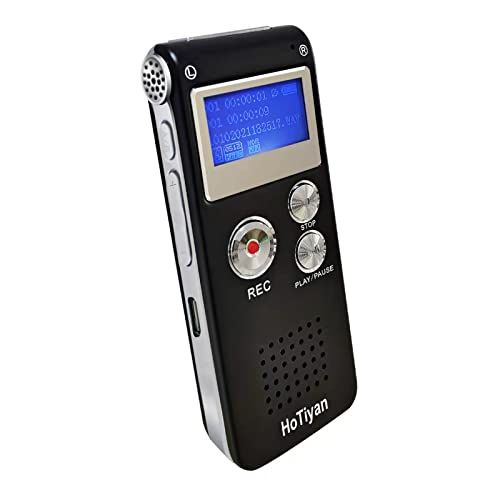
- Lightweight 1.6-ounce portable design
- Stereo MP3/WAV recording with voice activation
- A-B repeat and variable playback speed for studying
Best For: Portable everyday classroom recording
Best with Extra Features
128GB Noise-Reduced Voice Recorder

- 1536kbps PCM audio with stereo microphone
- 128GB card and up to 50 hours of recording
- Voice activation and one-button operation
Best For: Students needing substantial storage for lectures and meetings
Best Budget-Friendly Option

- Stereo recording with noise reduction
- Voice activation reduces quiet recording segments
- A-B repeat and variable playback speed
Best For: Students wanting simple lecture recording and study playback
Best for Playback Control

- 1536kbps dual-mic PCM recording
- Up to 45 hours of continuous recording
- Sixteen playback speeds with A-B repeat
Best For: Lecture reviewers who need detailed speed and repeat controls
Best All-Around Value – EVISTR L357 64GB Voice Recorder
If you need voice recorders for lectures that balance clear audio, long storage, and straightforward controls, the EVISTR L357 is a practical choice. Its adjustable recording gain, noise-reduction technology, and voice-activation mode are useful for classroom recording, while USB-C transfer makes moving files to a computer simple.
Best For: Students and professionals who want dependable lecture recording with generous storage and playback controls.
Pros:
- 64GB capacity stores up to 4,660 hours at 32Kbps.
- Offers 1536Kbps stereo recording, adjustable gain, and noise reduction.
- Supports voice activation, variable-speed playback, A-B repeat, and scheduled recording.
- Records for up to 32 hours and transfers files through USB-C.
Cons:
- Its most detailed recording mode will use storage more quickly than the quoted 32Kbps capacity.
- The feature-rich menu may take some time to learn.
The L357 is a well-rounded lecture recorder for buyers who value flexible recording settings and easy file organization. Date-and-time file names and Mac/Windows compatibility make reviewing class recordings more convenient.
Best for AI Note-Taking – EVISTR L359 128GB AI Recorder
For shoppers comparing voice recorders for lectures with built-in post-recording tools, the EVISTR L359 adds AI transcription and summaries to standard recording. Through the AI DVR Link app, it can transcribe in 113 languages, create summaries and mind maps, identify speakers, and provide Ask AI insights.
Best For: Students and professionals who want to turn recorded lectures into searchable, organized notes.
Pros:
- Supports transcription in 113 languages, summaries, mind maps, and speaker identification.
- 128GB storage holds up to 9,216 hours at 32Kbps.
- Records at up to 3072Kbps with intelligent noise reduction and voice activation.
- One-button operation, password encryption, and a HOLD switch improve everyday usability.
Cons:
- AI processing requires the AI DVR Link app and a wired OTG connection.
- Continuous recording is rated at up to 33 hours, less than some high-capacity alternatives.
The L359 is the most workflow-focused option in this group. Its value comes from combining recording with AI-assisted organization, although buyers should be comfortable transferring files to a compatible phone and using the companion app.
Best for Maximum Storage – Elasound 132GB Voice Recorder
The Elasound recorder stands out among voice recorders for lectures for its very large storage capacity and extended battery life. Its 128GB TF card configuration, triple noise reduction, voice activation, and included connection accessories make it suited to recording long classes, meetings, and interviews.
Best For: Heavy users who need to archive large numbers of recordings and minimize charging interruptions.
Pros:
- Stores up to 9,800 hours of audio at 32Kbps.
- Triple intelligent noise reduction is designed to emphasize clearer vocals.
- Up to 100 hours of continuous recording and headphone playback are specified.
- Includes a clip-on microphone, headphones, USB-C cable, and OTG adapters.
Cons:
- The listed 9800-hour capacity is based on 32Kbps recording.
- Its larger accessory bundle may be more than casual lecture recorders need.
- The supplied details specify MP3 recording rather than WAV support.
Choose the Elasound when storage and endurance matter more than advanced note-processing features. The one-touch switch and automatic file saving when power is low are useful for long recording sessions.
Best Budget-Friendly Simple Option – Sunlan 16GB Voice Recorder
If you prefer a straightforward device, this Sunlan model keeps lecture recording simple with dedicated REC, STOP, and PLAY controls. It combines noise reduction, voice activation, A-B repeat, and a built-in speaker in a compact 16GB recorder.
Best For: Casual students and first-time buyers who want basic lecture recording without a complicated interface.
Pros:
- Simple controls make starting, stopping, and reviewing recordings easy.
- Voice activation can reduce silent sections and conserve recording time.
- 16GB storage and up to 30 hours of continuous recording suit regular class use.
- Can also function as an MP3 player and removable USB storage device.
Cons:
- Its 16GB capacity is much smaller than the other options in this roundup.
- Playback is rated for up to 7 hours.
- Uses USB rather than the newer USB-C connection.
The Sunlan is a sensible pick when ease of use matters most. It lacks the storage and advanced processing of newer models, but its dedicated controls and core lecture-recording functions cover everyday classroom needs.
Best High-Capacity Pick – 72GB DSP 6.0 Voice Recorder
If you need voice recorders for lectures that can hold extensive audio without frequent file management, this NekSide model is a practical option. It combines DSP 6.0 noise reduction, WAV recording, playback, and OTG transfer to compatible smartphones or tablets.
Best For: Students and professionals who want very high storage capacity for lectures, meetings, interviews, and long-term audio archiving.
Pros:
- 72GB of built-in storage with up to 10,860 hours of stated recording capacity.
- DSP 6.0 noise reduction is designed to filter background noise and preserve speech detail.
- OTG support allows direct transfer to compatible smartphones or tablets.
- Portable design and playback function suit on-the-go recording.
Cons:
- Default recordings are WAV files; MP3 requires conversion using a computer.
- The built-in microphone operates in mono.
This recorder stands out primarily for storage and mobile transfer convenience. Choose it if you prefer keeping many lecture recordings available, but consider the WAV-to-MP3 conversion requirement before buying.
Best Feature-Rich Pick – EVIDA 128GB Lecture Recorder
For shoppers comparing voice recorders for lectures, the EVIDA 9296 offers a broad set of controls alongside high storage. It supports PCM, MP3, and WAV recording, adjustable voice activation, playback, password protection, and organized folder storage.
Best For: Students, teachers, and business users who want adjustable recording formats, voice activation, file organization, and security features.
Pros:
- 128GB storage is rated for up to 9,296 hours of recording.
- Supports MP3 at 128 or 192kbps and WAV at 1536kbps.
- Six voice-activation sensitivity levels can reduce silence and whisper clips.
- Includes password protection, A-B repeat, bookmarks, and four-folder file management.
Cons:
- Continuous battery life is listed as up to 54 hours, which is less than the stated storage capacity.
- The supplied details list no headphone jack.
- Its built-in microphone operates in mono.
The EVIDA is a strong choice when recording controls and file organization matter as much as capacity. Its voice-activation settings and playback tools are especially useful for reviewing lecture material.
Best Compact Budget Pick – HoTiyan 8GB Stereo Recorder
If you want voice recorders for lectures that are simple to operate and easy to carry, this HoTiyan model offers a compact format with stereo recording, voice activation, playback controls, and an MP3-player function. Its 8GB capacity is suited to more modest recording needs.
Best For: Students seeking a lightweight recorder for regular classes, short meetings, and repeated review of key passages.
Pros:
- Small 1.6-ounce design with a 3.3-inch length is easy to carry.
- Supports MP3 and WAV recording with stated capacity of up to 128 hours at 192kbps.
- Voice activation can pause recording during quieter periods.
- A-B repeat, variable playback speed, timestamps, and password protection support study use.
Cons:
- 8GB storage is substantially lower than the capacity of the other listed models.
- Continuous recording is listed at up to 20 hours per charge.
- File transfer uses the supplied Micro USB cable rather than a stated wireless or OTG connection.
This is the most compact and straightforward option of the three. It makes sense for students who value portability and study-focused playback features more than maximum storage.
Best with Extra Features – 128GB Noise-Reduced Voice Recorder
For shoppers comparing voice recorders for lectures, this model combines 1536kbps PCM recording, stereo microphones, and a pre-installed 128GB TF card. Its voice activation and one-button controls make it practical for capturing classes, meetings, and interviews without complicated setup.
Best For: Students and users who want generous storage, automatic recording, and simple playback controls.
Pros:
- 1536kbps PCM recording with noise cancellation and an omnidirectional stereo microphone
- 128GB included storage and up to 50 hours of continuous recording
- Voice activation, time-stamped files, A-B repeat, and variable playback speed
- One-button operation with Type-C charging and file transfer
Cons:
- The listed 50-hour recording figure is less than the device’s potential storage capacity
- Its 1.44-inch screen may feel compact for navigating many files
This is a strong all-around option when storage and recording clarity matter most. Voice activation can help reduce storage use, while the large card and time-stamped filenames make longer-term lecture organization easier.
Best Budget-Friendly Option – 16GB Voice-Activated Recorder
This compact choice is designed for shoppers seeking practical voice recorders for lectures without an oversized storage setup. It offers stereo recording, selectable voice activation, straightforward three-button operation, and playback tools for reviewing classroom material.
Best For: Students who want an uncomplicated recorder for lectures, study review, and occasional meetings.
Pros:
- Noise reduction and a sensitive microphone support high-definition stereo recording
- Voice activation can omit quiet pauses and whisper fragments
- A-B repeat, variable playback speed, password protection, and time-stamped filenames
- Up to 20 hours of continuous recording and USB file transfer
Cons:
- 16GB of storage is considerably less than the capacity of the other listed options
- The supplied details specify Micro USB rather than USB-C connectivity
- Playback lasts up to 8 hours with earphones, which is shorter than the recording runtime
The 16GB capacity is suitable for routine lecture recording, particularly if files are transferred regularly. Its simple controls and repeat functions make it useful for revisiting key sections while studying.
Best for Playback Control – Aiworth 136GB Voice Recorder
For lecture listeners who frequently review difficult sections, this Aiworth model stands out among voice recorders for lectures with 16 playback-speed levels and A-B repeat. Its dual microphones, 1536kbps PCM recording, voice activation, and expanded memory support detailed capture and flexible study sessions.
Best For: Students, writers, and professionals who need fine-grained playback control and long recording capacity.
Pros:
- Dual-mic PCM recording supports up to 1536kbps for clear voice capture
- Combined 8GB internal memory and 128GB card provide extensive storage
- Up to 45 hours of continuous recording from the rechargeable battery
- Sixteen playback-speed settings, A-B repeat, and password protection
Cons:
- The supplied specifications list 72GB storage, which conflicts with the advertised 136GB total
- MP3 is the listed recording format in the specifications, despite the product description highlighting PCM recording
- It is slightly larger and heavier than the 16GB model
This recorder is especially useful when lecture review is as important as capture. The adjustable playback speeds can slow down challenging explanations or accelerate familiar material, while the large stated memory setup suits frequent recording.
How We Picked the Best Voice Recorders for Lectures
We focused on features that matter during real classes: dependable recording, accessible controls, useful storage, portability, and practical playback. The selection includes compact 8GB and 16GB devices as well as high-capacity models designed for frequent recording. We also considered voice activation, advertised noise reduction, password protection, USB connectivity, and AI transcription or summarization where offered.
Capacity claims and battery estimates vary by recording format and settings, so treat maximum hour figures as best-case specifications rather than guaranteed classroom performance. Likewise, noise reduction can improve intelligibility but cannot fully replace a good microphone position or a quiet recording environment.
Quick Comparison
- Best for simple recording: Choose a basic playback recorder with physical controls and USB transfer.
- Best for frequent lectures: High-capacity 128GB or larger models reduce the need to manage files constantly.
- Best for discreet operation: Compact voice-activated recorders can begin recording when sound is detected, subject to their sensitivity settings.
- Best for study workflows: AI transcription and summarization models may speed up note review, but check supported languages, app requirements, and processing limits.
Key Buying Factors for Voice Recorders for Lectures
Audio Quality and Microphone Performance
Look for clear speech capture, adjustable recording formats, and noise-reduction features. A recorder placed near the lecturer will generally perform better than one left inside a bag or at the back of a large room.
Storage and File Management
More storage helps if you record several classes each week, but usable capacity depends on bitrate and file type. Confirm whether recordings transfer as common formats such as WAV or MP3 and whether the device supports folders, timestamps, or easy deletion.
Battery Life and Charging
Choose a battery that comfortably exceeds your longest lecture or study session. USB recharging is convenient, while a clear battery indicator helps prevent missed recordings. If you record all day, prioritize both endurance and charging speed.
Playback and Transcription
On-device playback, pause, fast-forward, and rewind are valuable for reviewing difficult sections. AI transcription can save time, but verify whether it works offline, requires a subscription, or sends audio to a cloud service.
Privacy and Classroom Etiquette
Always follow school policies and applicable consent laws before recording. Password protection can help secure stored files, but it does not replace careful handling when transferring or sharing audio.
Who Should Buy Which Voice Recorders for Lectures?
Students who want the simplest setup should choose a compact recorder with physical buttons, playback, USB transfer, and enough storage for a week of classes. Heavy users should favor a high-capacity model with voice activation and strong battery life. Learners who spend significant time converting recordings into notes may prefer an AI-enabled device, provided its transcription accuracy and privacy terms suit their needs.
For large lecture halls, prioritize microphone quality and placement flexibility over headline storage numbers. For interviews, seminars, or group discussions, look for noise reduction, reliable playback, and a recorder that can capture voices from multiple directions. Whichever model you choose, test it before an important class and make a short sample recording to confirm volume, file format, and available space.