The best multitrack loop stations let you build complete performances from layered guitar, vocals, percussion, keyboards, and backing parts. The right model can turn a simple idea into a polished live arrangement without requiring a computer.
This roundup compares 10 options across floor-based, tabletop, and compact pedal formats. We focus on recording flexibility, rhythm tools, connectivity, control, and ease of use so you can choose a looper that fits your performance style.
Best 10 Multitrack Loop Stations Picks for 2026
Flagship Floor Looper
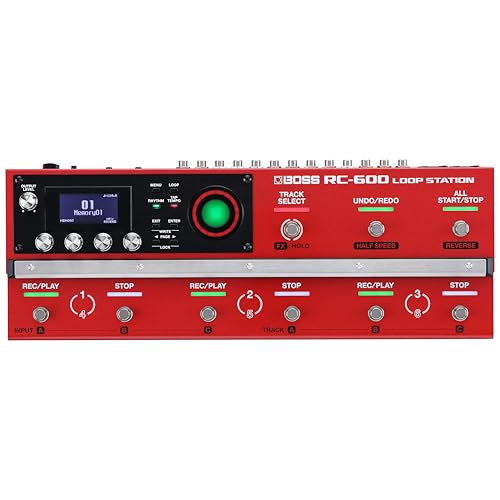
- Six simultaneous stereo phrase tracks
- Extensive onboard effects and deep customization
- Nine assignable footswitches for live control
Best For: Advanced live looping musicians
Compact Practice Looper
AITONE AT-01 Looper and Drum Machine

- 20-minute looping with unlimited overdubs
- 16 drum grooves with tap tempo
- Small metal enclosure for portable setups
Best For: Beginners and rhythm-focused practice
Performance Tabletop Looper

- Five stereo phrase tracks with dedicated faders
- Dual effects sections and extensive FX selection
- Two XLR mic inputs with phantom power
Best For: Vocal and tabletop live performers
Tabletop Multitrack Classic
BOSS RC-505 Mk2 Tabletop Looper
- Five stereo tracks for layered looping
- Two XLR mic inputs with phantom power
- Stereo line inputs and built-in rhythm generator
Best For: Hands-on tabletop looping performances
Best All-Around Choice

- Two stereo tracks and 13 hours of recording
- Onboard rhythms and color LCD
- XLR, 1/4-inch, and USB connectivity
Best For: Performers needing flexible dual-track looping
Best for Dedicated Foot Control
BOSS RC-300 Three-Track Looper

- Three stereo tracks with dedicated footswitches
- Per-track faders and expression pedal
- Up to three hours of internal recording
Best For: Live players wanting tactile three-track control
Best for Electronic Performers

- Two stereo tracks with hands-on controls
- 64 phrase memories across eight banks
- XLR mic input, effects, USB audio/MIDI
Best For: Electronic performers and beatboxers using tabletop control
Best Stereo Multitrack Pedal

- Two synchronized stereo tracks
- Up to three hours of stereo recording
- 99 phrase memories and built-in effects
Best For: Performers wanting hands-on stereo two-track looping
Best Rhythm-Focused Looper
BOSS RC-10R Rhythm Loop Station

- 280 preset rhythm styles
- Serial two-track song operation
- Six hours of stereo recording
Best For: Solo performers building structured loop-and-rhythm arrangements
Best Compact Advanced Looper

- 13 hours of stereo recording
- 57 rhythms and seven drum kits
- MIDI, USB, and external control support
Best For: Compact pedalboard rigs needing advanced looping connectivity
Flagship Floor Looper – BOSS RC-600
For musicians who need serious multitrack loop stations control, the BOSS RC-600 combines six simultaneous stereo phrase tracks with extensive effects and assignable footswitches. Its floor-based design is aimed at building complex live performances in real time.
Best For: Guitarists, singer-songwriters, multi-instrumentalists, and experienced looping performers.
Pros:
- Six simultaneous stereo tracks support complex layered arrangements.
- 32-bit AD/DA conversion and 32-bit floating-point processing provide class-leading sound quality.
- Offers 49 Input FX, 53 Track FX, and four effects at once in each section.
- Nine freely assignable footswitches provide flexible performance control.
Cons:
- Its large, 8.2-pound floor-based design may be more than casual users need.
- The extensive controls and customizable functions may require a learning period.
The RC-600 is a powerful choice when track count, effects, and hands-free control matter more than a compact setup. It is best suited to performers who will take advantage of its advanced workflow.
Compact Practice Looper – AITONE AT-01 Looper and Drum Machine
The AITONE AT-01 is a compact entry point into multitrack loop stations, pairing a 20-minute looper with a basic drum machine. It supports unlimited overdubs within a loop and keeps operation simple for practice, lessons, songwriting, and small performances.
Best For: Beginners, hobbyists, teachers, and solo players who want looping with built-in rhythm backing.
Pros:
- Records up to 20 minutes with unlimited overdubs within the loop.
- Includes 16 drum grooves and tap tempo, including two odd-meter fusion patterns.
- Mini metal housing saves pedalboard space at approximately 5.5 ounces.
- Looper and drum machine can run separately or together.
Cons:
- Only one footswitch controls the main record, playback, overdub, stop, and clear functions.
- The 9V power supply is not included, and there is no battery compartment or headphone output.
- Drum features do not include custom pattern creation, fills, or advanced song programming.
The AT-01 favors affordability and straightforward practice features over extensive routing or track management. It is a practical choice for building layered ideas without opening an app or assembling a larger rig.
Performance Tabletop Looper – BOSS RC-505mkII
The BOSS RC-505mkII is a tabletop option for multitrack loop stations users who want hands-on mixing and vocal or instrument connectivity. Five stereo phrase tracks, independent faders, dual effects sections, and extensive memory storage support detailed live arrangements.
Best For: Vocalists, beatboxers, electronic performers, and tabletop looping artists.
Pros:
- Five stereo phrase tracks have dedicated controls and independent volume faders.
- Two XLR microphone inputs include phantom power, alongside stereo line inputs and outputs.
- Provides 49 Input FX types and 53 Track FX types with four simultaneous effects in each section.
- Stores 99 memories with phrase tracks, effects, playback settings, and control assignments.
Cons:
- The tabletop format is less suited to players who need a floor pedal controlled primarily by foot.
- Its extensive routing, effects, and customization options may be demanding for beginners.
Choose the RC-505mkII when tactile fader control and microphone connectivity are central to your performance. Its memory capacity and flexible routing make it particularly useful for repeatable, prepared live sets.
Tabletop Multitrack Classic – BOSS RC-505 Mk2 Tabletop Looper
The BOSS RC-505 Mk2 is a tabletop looper built around five stereo tracks, microphone connectivity, and rhythm-oriented looping controls. It suits performers looking for a hands-on multitrack loop stations setup rather than a conventional floor pedal.
Best For: Tabletop performers who need five stereo tracks and direct microphone or line-input access.
Pros:
- Five stereo tracks provide room for layered arrangements.
- Two XLR microphone inputs include phantom power.
- Two stereo line input pairs support additional audio sources.
- Includes looping controls and a rhythm generator.
Cons:
- Tabletop operation may not suit guitarists seeking a traditional foot-controlled pedal.
- The supplied notes provide less detail about effects and workflow customization than the more fully specified RC-505mkII listing.
This version is worth considering for hands-on tabletop looping with multiple input options. Its five-track layout gives solo performers a practical foundation for layering vocals, instruments, and rhythm parts.
Best All-Around Choice – BOSS RC-500 Dual-Track Looper
The BOSS RC-500 is a practical choice for musicians who want multitrack loop stations with two stereo tracks, substantial onboard storage, and flexible connectivity. Its 13 hours of recording time, rhythm tracks, color LCD, and USB import/export make it well suited to detailed live arrangements and practice setups.
Best For: Performers who want a capable dual-track looper with microphone and instrument connectivity.
Pros:
- Two-track looping with up to 13 hours of stereo recording.
- Onboard rhythm tracks support fuller performances.
- XLR and 1/4-inch inputs, USB, and a color LCD add flexibility.
Cons:
- Its 6.69-by-5.43-inch footprint is larger than a compact tabletop unit.
- Requires a 9-volt, 500-milliamp AC adapter.
The RC-500 balances recording capacity, connectivity, and hands-on control, making it a strong general-purpose option among multitrack loop stations.
Best for Dedicated Foot Control – BOSS RC-300 Three-Track Looper
The BOSS RC-300 is designed for players who want multitrack loop stations with three stereo tracks and dedicated controls. Individual footswitches, track faders, an expression pedal, and up to three hours of internal recording support hands-on live arrangement and effects control.
Best For: Guitarists and live performers who prefer three independently controlled tracks and foot-operated control.
Pros:
- Three stereo tracks have dedicated footswitches and controls.
- Individual faders make track balancing straightforward.
- Expression pedal enables real-time effects control.
Cons:
- Three hours of internal recording is less than the RC-500’s stated capacity.
- The unit offers fewer tracks than a four-track looper.
With its dedicated track layout and broad effects selection, the RC-300 remains a compelling fit for performers who prioritize immediate foot control over maximum recording time.
Best for Electronic Performers – BOSS RC-202 Tabletop Looper
The BOSS RC-202 brings multitrack loop stations into a compact tabletop format for hands-on performance. It provides two simultaneous stereo tracks, extensive phrase storage, onboard effects, an XLR microphone input with phantom power, and USB audio/MIDI connectivity for electronic musicians and beatboxers.
Best For: Club performers, electronic musicians, and beatboxers who want tabletop control and creative effects.
Pros:
- Two stereo tracks include dedicated controls and loop indicators.
- 64 phrase memories organize loops across eight banks.
- Input and track effects, phantom power, MIDI, and USB support advanced setups.
Cons:
- Hands-free operation requires optional footswitches or an expression pedal.
- Its tabletop design may not suit players seeking an integrated pedal layout.
- It has two tracks rather than the RC-300’s three.
The RC-202 is particularly appealing when fingertip operation, phrase organization, and sampler-style effects matter more than conventional pedalboard control.
Best Stereo Multitrack Pedal – BOSS RC-30 Loop Station
For players comparing multitrack loop stations, the BOSS RC-30 stands out with two synchronized stereo tracks, true stereo I/O, and dedicated track controls. It also provides up to three hours of stereo recording and storage for 99 onboard phrase memories.
Best For: Guitarists and performers who want hands-on two-track stereo looping with built-in effects.
Pros:
- Two synchronized stereo tracks with dedicated volume faders and track-select buttons
- True stereo input and output support
- Up to three hours of stereo recording with 99 phrase memories
- Built-in effects for processing loops
Cons:
- Larger and heavier than the compact RC-5
- Uses corded electric power with a 9-volt, 300-milliamp requirement
The RC-30 is a practical choice when independent track control and stereo operation matter more than a minimal pedalboard footprint. Its onboard memory and effects make it suitable for extended rehearsals, songwriting, and live loop arrangements.
Best Rhythm-Focused Looper – BOSS RC-10R Rhythm Loop Station
The BOSS RC-10R combines multitrack loop stations functionality with song-based looping and dynamic rhythms in a compact enclosure. Its two-track operation, 280 preset rhythm styles, and 16 drum kits are designed for building structured performances.
Best For: Solo musicians who want loop parts, song sections, and accompaniment rhythms in one small pedal.
Pros:
- Serial two-track operation with two independent song parts
- Over 280 preset rhythm styles with fills, transitions, intros, and endings
- 16 drum kits and 50 user rhythm memories
- Six hours of stereo recording and 99 phrase memories
Cons:
- Its rhythm-focused feature set may be more than needed for simple looping
- Two-track operation is serial rather than two independent synchronized stereo tracks
Choose the RC-10R if rhythmic structure is central to your performance. The LCD, circular status indicators, and selectable output filter add useful control for routing guitar and rhythm sounds to an amp or full-range system.
Best Compact Advanced Looper – BOSS RC-5 Loop Station
The BOSS RC-5 is a compact option for musicians comparing multitrack loop stations with advanced connectivity. It offers 13 hours of stereo recording, 99 phrase memories, a color LCD, MIDI I/O, USB, and external control support.
Best For: Pedalboard-conscious players who need high-quality looping, rhythms, and expanded control connections.
Pros:
- 13 hours of stereo recording and 99 phrase memories
- Class-leading 32-bit AD/DA and 32-bit floating-point processing
- 57 rhythms with A/B variations and seven drum kits
- Full MIDI I/O, USB, reverse function, and external control support
Cons:
- Single-track looping is less suited to separate independent track mixing
- Mini TRS MIDI connections may require compatible cables or adapters
- PSA adapter is optional for extended sessions
The RC-5 prioritizes a small footprint without giving up recording capacity or integration options. It is especially compelling for compact rigs that need MIDI synchronization, external foot control, and a broad rhythm library.
How We Picked the Best Multitrack Loop Stations
We evaluated these loopers by looking at the features that matter most during practice, songwriting, and live performance. Key considerations included the number of tracks or layers, phrase-memory capacity, onboard rhythms, effects, footswitch layout, hands-free control, audio quality, and connectivity.
Format also matters. Floor-based units are generally better for guitarists and performers who need foot control, while tabletop loopers can offer more hands-on access for beatmakers, vocalists, and electronic musicians. Compact pedals are easier to transport but may trade away advanced mixing or routing features.
Quick Comparison
| Best For | Look For |
|---|---|
| Full live arrangements | Multiple tracks, strong foot control, phrase memory, and dedicated outputs |
| Beatmaking and vocal performance | Tabletop controls, effects, USB audio, and MIDI support |
| Guitarists on a budget | Simple overdubbing, durable switches, and useful rhythm patterns |
| Songwriting practice | Built-in drums, song sections, undo/redo, and easy phrase storage |
Key Buying Factors for Multitrack Loop Stations
Tracks, Layers, and Memory
Check whether the unit offers separate tracks or simply stacks overdubs onto one phrase. Independent tracks provide better control when muting, rearranging, or mixing parts. Phrase-memory capacity is equally important if you perform multiple songs or want to save ideas for later.
Rhythm and Songbuilding Tools
Built-in drums can help you stay in time and create more complete arrangements. If you want verse, chorus, and bridge-style performances, prioritize models with song-based looping, rhythm variations, fills, or section controls.
Control and Connectivity
Consider how many footswitches you need and whether external switches or expression pedals are supported. USB, MIDI, microphone inputs, stereo I/O, and dedicated outputs can make a major difference in recording setups and live rigs.
Size, Durability, and Workflow
A larger unit may provide faster access to controls, but a compact pedal is easier to fit on a board. Choose a layout that matches how you perform: hands-free foot control for guitar, or direct tabletop access for beat-focused and vocal looping.
Who Should Buy Which Multitrack Loop Stations?
Choose a full-size floor looper if you need layered live arrangements, extensive control, and hands-free operation. A tabletop model is a better match for vocalists, beatmakers, and electronic performers who want immediate access to track and effect controls. Compact loop pedals suit beginners, practice sessions, and musicians who value portability.
For rhythm-driven songwriting, prioritize a model with varied drum patterns and song-focused controls. If recording and production are central to your setup, look for USB audio, MIDI, stereo connectivity, and enough memory for your working library. The best choice is the one whose workflow feels natural enough that operating the looper never distracts from the performance.