The best capture cards with HDMI make it easier to stream console gameplay, record camera footage, or pass video into a computer without rebuilding your entire setup. The right model depends on your source resolution, desired frame rate, passthrough needs, and connection type.
This roundup compares 10 options ranging from high-end HDMI 2.1 hardware to affordable USB 3.0 devices, helping you match features and performance to your workflow.
Best 10 Capture Cards with Hdmi Picks for 2026
Premium HDMI 2.1 Pick

- 4K144 capture and passthrough
- HDMI 2.1 with VRR passthrough
- Up to 1080p240 capture
Best For: High-refresh console and PC gaming
Professional 1080p Workhorse
Magewell USB Capture HDMI Gen 2

- 1080p60 HDMI capture
- FPGA-based video processing
- Windows, Mac, Linux, and Chrome OS support
Best For: Reliable everyday and continuous HDMI capture
Camera-to-USB Favorite

- Captures up to 4K60
- Works with cameras and action cams
- Low-latency USB 3.0 connection
Best For: Using a camera as a streaming webcam
Flexible Budget Option
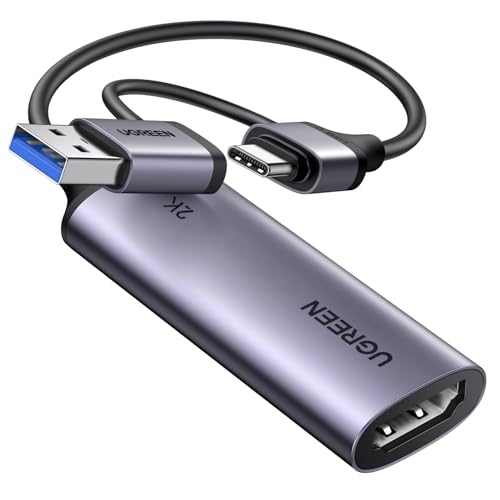
- 4K30 input and 2K30 output
- USB-A and USB-C ports
- Works with consoles, PCs, and tablets
Best For: Affordable multi-device streaming setups
Best All-Around Pick

- 4K input with 1080p at 60Hz output
- Built-in mic input for commentary
- Plug-and-play support for consoles and streaming apps
Best For: Gamers and creators needing flexible capture and audio connectivity
Best for 2K Capture

- Up to 2K at 30Hz or 1080p at 60Hz output
- USB-A and USB-C connectivity
- Compact, software-based plug-and-play capture
Best For: Streamers and mobile users who want USB-C and flexible resolutions
Best Budget Option
Compact 1080p HDMI Capture Card

- 1080p HDMI video and audio capture
- Driver-free support for major computer systems
- Compact design for streaming and meetings
Best For: Casual streamers and users seeking simple 1080p capture
Best 2K USB Capture Card
UGREEN 4K Loop-Out HDMI Capture

- Captures 2K at 30fps or 1080p at 60fps
- 4K@30Hz input and loop-out
- USB-A/USB-C and broad OS compatibility
Best For: Gamers and streamers wanting 2K capture with low-latency monitoring
Best for Mic Commentary
XIIXMASK 4K Pass-Through HDMI Capture

- 4K@60Hz input and loop-out
- 1080p60 or 1440p30 USB capture
- Built-in 3.5mm mic-in for commentary
Best For: Streamers adding voice commentary to gameplay or video
Best Simple USB-C Option
Papeaso 4K HDMI to USB-C Capture

- 4K HDMI input at up to 60Hz
- 1080p capture at 60fps
- Driver-free USB-C design with adapter
Best For: Basic streaming and recording on USB-C devices
Premium HDMI 2.1 Pick – Elgato 4K X
The Elgato 4K X is a high-end choice among capture cards with HDMI, built for creators who want sharp 4K footage, high frame rates, and smooth passthrough for modern consoles and PCs. HDMI 2.1, VRR passthrough, HDR10, and USB 3.2 Gen 2 connectivity make it particularly well suited to demanding gaming and streaming setups.
Best For: PS5, Xbox Series X, PC, and Mac users who need 4K capture and high-refresh passthrough.
Pros:
- Supports 4K144 capture and passthrough.
- HDMI 2.1 supports up to 1080p240 capture.
- VRR passthrough and ultra-low latency help maintain smooth, responsive gameplay.
- Works with OBS, Streamlabs, Twitch Studio, Zoom, Teams, and other platforms.
Cons:
- Requires a USB 3.2 Gen 2 port for full performance.
- System requirements are more demanding than those of basic capture devices.
If you want a future-ready HDMI capture card for high-refresh gaming, the 4K X stands out for its HDMI 2.1 support and advanced passthrough features. It is best suited to buyers willing to match it with compatible hardware.
Professional 1080p Workhorse – Magewell USB Capture HDMI Gen 2
The Magewell USB Capture HDMI Gen 2 is a practical, dependable option among capture cards with HDMI for recording or streaming HDMI sources at up to 1080p60. Its onboard FPGA processing handles scaling, cropping, de-interlacing, and color conversion, helping reduce the load on the connected computer.
Best For: Users who need reliable HDMI capture for Windows, macOS, Linux, or Chrome OS.
Pros:
- Captures HDMI video up to 1080p60, with input support up to 2048×1080 at 60fps.
- On-device processing reduces CPU workload.
- Plug-and-play operation works across Windows, macOS, Linux, and Chrome OS.
- Compact design, thermal protection, status LEDs, and a three-year warranty support long-term use.
Cons:
- It is limited to 1080p capture rather than 4K recording.
- USB 3.1 is listed as the system requirement for full compatibility.
Choose the Magewell when stability and broad operating-system support matter more than 4K resolution. Its processing features and 24/7-oriented design make it a strong fit for consistent, professional-style workflows.
Camera-to-USB Favorite – Elgato Cam Link 4K
The Elgato Cam Link 4K is one of the more focused capture cards with HDMI, turning a compatible DSLR, mirrorless camera, camcorder, action camera, or iPhone into a computer-ready video source. It supports 1080p60 and up to 4K60 capture, while ultra-low latency helps keep video and audio synchronized.
Best For: Streamers, presenters, and creators who want to use a camera as a webcam or live video source.
Pros:
- Supports 1080p60 and 4K60 capture with compatible equipment.
- Works with DSLRs, mirrorless cameras, camcorders, action cameras, and iPhone setups.
- Ultra-low latency helps maintain video and audio synchronization.
- Compatible with OBS, Zoom, Discord, PC, Mac, and iPad.
Cons:
- Requires a compatible camera and HDMI output.
- The supplied details list Windows under minimum requirements while also identifying Mac and iPad compatibility, so users should verify their setup.
Cam Link 4K makes the most sense when your primary goal is camera capture rather than console passthrough. Its compact USB 3.0 design and broad camera compatibility make it an easy upgrade for live video and streaming.
Flexible Budget Option – UGREEN 2K HDMI Capture Card
The UGREEN 2K HDMI Capture Card is a versatile pick among capture cards with HDMI for everyday streaming, recording, and video transfer. It accepts up to 4K30 input, outputs up to 2K30, and supports 1080p60, while both USB-A and USB-C connections broaden compatibility with computers, tablets, phones, and other devices.
Best For: Multi-device streamers using consoles, PCs, phones, tablets, or Meta Quest headsets.
Pros:
- Supports 4K30 input, 2K30 output, and 1080p60 capture.
- Includes USB-A and USB-C connectivity for modern devices.
- Works with Windows, macOS, Linux, iPadOS 17 or later, and popular streaming software.
- Aluminum housing helps with heat dissipation and EMI shielding.
Cons:
- Output is limited to 2K30 rather than 4K.
- It supports only one-way HDMI input to USB output.
- Console sources may require HDCP to be disabled.
UGREEN is a useful choice for buyers who value broad device compatibility and flexible USB connections over top-end refresh rates. Check the source resolution, HDCP settings, and iPadOS version before buying.
Best All-Around Pick – Acer 4K HDMI Capture Card
For shoppers comparing capture cards with hdmi, the Acer OCB5B0 stands out as a versatile USB 3.0 option with 4K input, 1080p at 60Hz output, and HDMI loop-out. Its YUY2 support, mic input, and broad device compatibility make it practical for gaming, streaming, recording, classes, and video calls.
Best For: Gamers and creators who want low-latency capture, microphone connectivity, and support for consoles, cameras, computers, and mobile devices.
Pros:
- Accepts 4K input and delivers 1080p at 60Hz.
- Includes mic-in for commentary and voice recording.
- Plug-and-play design requires no extra drivers or external power.
- Works with OBS, XSplit, VLC, YouTube, Facebook, Switch, PS5, Xbox, and more.
Cons:
- USB 3.0 is required for USB 3.0 operation.
- Its capture resolution is listed as up to 1080p, despite 4K input support.
Choose this model if you value flexible connectivity and built-in commentary support. It is a strong fit for users who want one compact capture card for gaming, streaming, teaching, and recording.
Best for 2K Capture – USB 3.0 HDMI Capture Card
This USB 3.0 model is one of the more flexible capture cards with hdmi for users who want 1080p at 60fps or 2K at 30Hz. It supports 4K input, includes USB-A and USB-C connectivity, and uses an aluminum-alloy body designed for heat dissipation. Note that it is intended for capture through software rather than direct display casting.
Best For: Streamers, meeting hosts, and mobile setups that need USB-C compatibility and multiple capture resolutions.
Pros:
- Supports up to 4K input, 2K at 30Hz, or 1080p at 60Hz output.
- Includes USB 3.0 and USB-C connection options.
- Compact, driver-free, and powered through USB.
- Compatible with Windows, macOS, Linux, Android, OBS, VLC, Zoom, consoles, and cameras.
Cons:
- Requires capture software and cannot directly cast to a monitor or TV.
- USB-C-to-HDMI conversion is not supported as a standard use case and may cause signal loss.
- Audio setup in OBS may require restarting the software.
This is a practical choice when resolution flexibility and USB-C support matter most. Use a USB 3.0 port for the best chance of maintaining the listed bandwidth and output modes.
Best Budget Option – Compact 1080p HDMI Capture Card
For a straightforward entry point into capture cards with hdmi, this compact USB 2.0 model handles HDMI video and audio capture at up to 1080p. It supports common streaming software and works with Windows, macOS, and Linux without requiring a separate driver installation.
Best For: Casual streamers, meeting participants, and console users who want a small, simple capture device for 1080p workflows.
Pros:
- Captures HDMI video and audio through a USB 2.0 connection.
- Supports Windows, macOS, and Linux with plug-and-play operation.
- Works with Twitch, YouTube, OBS, Potplayer, and VLC.
- Very lightweight and easy to carry.
Cons:
- Uses USB 2.0 rather than USB 3.0.
- Listed support is centered on 1080p capture, with fewer advanced features than the other options.
- Requires a computer with at least the specified i5-class CPU, GT630-class graphics, and 4GB RAM.
This model makes sense when affordability, portability, and basic compatibility are more important than higher-bandwidth features. It is well suited to uncomplicated streaming, recording, and presentation sharing.
Best 2K USB Capture Card – UGREEN 4K Loop-Out HDMI Capture
For shoppers comparing capture cards with hdmi, the UGREEN model is a flexible choice when you want 2K recording, 4K input, and local HDMI loop-out. It captures up to 2K at 30fps or 1080p at 60fps, while its USB-A and USB-C connections suit a range of computers and recording devices.
Best For: Gamers and streamers who need 2K capture with low-latency 4K loop-out.
Pros:
- Captures up to 2K at 30fps and 1080p at 60fps.
- Supports 4K@30Hz HDMI input and loop-out for real-time monitoring.
- Includes USB 3.0 Type-A and Type-C connectivity with plug-and-play setup.
- Works with Windows, macOS, Linux, and Android, plus popular consoles and OBS.
Cons:
- Does not capture 4K video.
- iPhones cannot be used as UVC data acquisition devices.
- Not compatible with Fire TV Stick.
The UGREEN card stands out for combining 2K recording with a 4K loop-out path and dual USB connectivity. It is a practical fit for setups that prioritize monitoring and compatibility over native 4K capture.
Best for Mic Commentary – XIIXMASK 4K Pass-Through HDMI Capture
Among capture cards with hdmi, the XIIXMASK model is useful for creators who want 4K pass-through, 1080p 60fps capture, and a dedicated microphone input. Its aluminum design, USB 3.0 connection, and support for common streaming software make it suitable for gaming, meetings, and live production.
Best For: Streamers who want to add microphone commentary while capturing console or camera footage.
Pros:
- Accepts 4K@60Hz input and provides up to 4K@60Hz loop-out.
- Captures 1080p at 60fps or 1440p at 30fps over USB 3.0.
- 3.5mm mic-in supports voice recording and live commentary.
- Compatible with Windows, macOS, Linux, Android, iPadOS 17+, OBS, VLC, and Zoom.
Cons:
- The mic input does not record party chats.
- OBS may need to be restarted after audio setup.
- The supplied notes list Windows as the minimum system requirement despite broader compatibility details.
This is a strong all-purpose option when voice input matters as much as video capture. Its 4K pass-through preserves a high-resolution gaming signal, while the capture output is aimed at 1080p60 or 1440p30 production.
Best Simple USB-C Option – Papeaso 4K HDMI to USB-C Capture
If you need a straightforward entry in the capture cards with hdmi category, the Papeaso HU-03C offers 4K HDMI input and 1080p capture at 60fps through USB-C. Its driver-free design and included USB-C adapter make it convenient for basic streaming, recording, meetings, and console setups.
Best For: Users seeking an uncomplicated USB-C capture card for 1080p60 recording.
Pros:
- Supports HDMI input up to 3840×2160 at 60Hz.
- Records up to 1080p at 60fps.
- Driver-free operation with Windows, macOS, Linux, and Android support.
- Includes a USB-C converter adapter for added connection flexibility.
Cons:
- Uses USB 2.0 technology rather than USB 3.0.
- Its listed capture resolution is limited to 1080p.
- The supplied notes contain inconsistent input/output terminology, so verify port requirements before purchase.
The Papeaso is best viewed as a compact, basic capture solution rather than a feature-heavy production device. It delivers 1080p60 recording and broad device compatibility, with USB-C connectivity suited to modern laptops and tablets.
How We Picked the Best Capture Cards with Hdmi
We evaluated these capture cards by focusing on the specifications that most affect real-world use: supported input and capture resolutions, frame rates, passthrough capabilities, connection standards, latency, compatibility, and intended use. We also separated premium gaming hardware from simpler USB devices so shoppers can compare products within a realistic budget and performance range.
Input resolution and captured output are not always the same. A card may accept a 4K signal while recording at 1080p, so check both specifications before buying. We also considered whether a model is better suited to consoles, cameras, PC gaming, or general video production.
Quick Comparison
- Best for high-end gaming: Elgato 4K X, with HDMI 2.1 support and high-refresh-rate capabilities.
- Best for camera capture: Elgato Cam Link 4K, designed for compatible DSLR, mirrorless, camcorder, and action cameras.
- Best for dependable professional capture: Magewell USB Capture HDMI Gen 2.
- Best for affordable streaming: The UGREEN, acer, and generic USB 3.0 options offering 1080p60 capture.
- Best for passthrough setups: Models advertising 4K input or loop-out, provided their supported passthrough resolution matches your display.
Key Buying Factors for Capture Cards with Hdmi
Capture Resolution and Frame Rate
For smooth gameplay and streaming, 1080p at 60 frames per second remains a practical baseline. Choose a higher-end model if you record 4K footage or use high-refresh-rate gaming sources. Remember that 4K input, 4K passthrough, and 4K recording are separate features.
HDMI Version and Passthrough
HDMI 2.1 is important for newer consoles and gaming PCs that use high resolutions or refresh rates. Loop-out or passthrough lets the original signal continue to a monitor while the computer captures a separate feed. Verify HDR, variable refresh rate, and resolution support if those features matter to your setup.
USB Connection and Compatibility
USB 3.0 or faster is generally preferable for high-quality video capture. USB-C describes the connector, not necessarily the speed, so inspect the full specification. Confirm compatibility with your operating system, streaming software, camera, console, and available ports.
Latency, Audio, and HDCP
Low latency matters when monitoring or playing through the capture workflow. Check how audio is handled and whether the device supports your microphone or mixer setup. HDCP-protected content typically cannot be captured, so these devices are intended for compatible gameplay, cameras, and other unprotected HDMI sources.
Who Should Buy Which Capture Cards with Hdmi?
Competitive gamers and owners of newer high-refresh-rate hardware should prioritize HDMI 2.1 support, low latency, and reliable passthrough. Streamers using a camera should choose a camera-focused HDMI-to-USB adapter and confirm that their camera provides a clean HDMI output. Console streamers who mainly broadcast at 1080p60 can save money with a USB 3.0 model that includes dependable passthrough.
For occasional recording, basic gameplay capture, or a compact laptop setup, an affordable 1080p60 card is often sufficient. Professional creators and production teams should favor a better-supported device with predictable drivers and broad software compatibility rather than choosing solely by maximum resolution.