High-refresh gaming setups need more than a basic 4K capture card. To preserve smooth 1440p at 240Hz while sending video to a streaming PC, look for the right combination of HDMI bandwidth, passthrough support, capture limits, and low latency.
This roundup compares 10 capture cards suited to modern PC and console workflows, including HDMI 2.1 models, internal PCIe cards, and portable USB options. Use the guide below to match features to your display, source device, and streaming goals.
Best 10 Capture Card for 1440p 240hz Passthrough Picks for 2026
Best Overall

- HDMI 2.1 with 1440p240-class high-refresh passthrough
- 4K144 capture and passthrough with VRR and HDR10
- USB 3.2 Gen 2 and broad streaming-app compatibility
Best For: External high-refresh PC and console streaming
Best Plug-and-Play Option
AVerMedia Live Gamer Extreme 3

- Driver-free setup with no external power required
- 4K60 HDR passthrough and up to 1080p240 passthrough
- 3.5mm audio in/out for chat and commentary
Best For: Simple streaming setups with console audio needs
Best Internal Card

- Internal PCIe design for Windows desktop systems
- 8K60 passthrough with HDMI 2.1 and VRR support
- 4K60 HDR10 capture and up to 1080p240 recording
Best For: Windows desktops and dual-PC streaming
Best 1440p240 Passthrough
AVerMedia Live Gamer Ultra 2.1

- Explicit 1440p240 and 1080p360 HDMI 2.1 passthrough
- 4K144 HDR/VRR passthrough on compatible displays
- Party chat, 5.1 audio, and USB-C 10Gbps connectivity
Best For: High-refresh PC and console capture
Best for Easy Setup

- 4K60 capture with HDR10 support
- 1440p120 or 1080p240 passthrough
- Analog audio input and broad compatibility
Best For: Flexible console and PC capture with HDR
Best Feature Set

- 4K60 HDR and VRR passthrough
- 1440p144 and 1080p240 support
- Ultrawide, RGB24, and 5.1 audio features
Best For: Advanced streaming and ultrawide gaming setups
Best Value Features

- 4K60 capture with 1080p240 passthrough
- HDR and VRR support
- Windows, macOS, and Linux compatibility
Best For: Compact, cross-platform high-refresh capture
Best Portable Pick
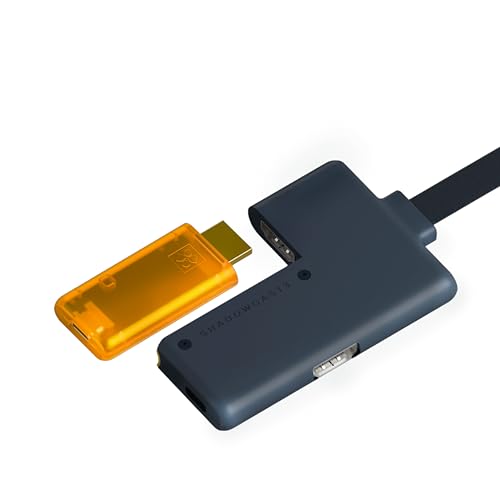
- Zero-latency HDMI passthrough
- Captures 1440p120 and 1080p240
- Portable USB-C design with power passthrough
Best For: Portable streaming and gaming setups
Best Heavy-Duty Pick

- 4K60 HDR10 capture
- Zero-lag passthrough with capture up to 240 fps
- PCIe x4 design for Windows desktops
Best For: High-performance desktop streaming
Best High-Refresh Value

- Supports 1440p144 and 1080p240
- 4K60 capture and passthrough with HDR, VRR, and ALLM
- Driver-free USB operation with audio ports
Best For: Flexible high-refresh and ultrawide setups
Best Overall – Elgato 4K X
The Elgato 4K X is a strong choice if you need a capture card for 1440p 240Hz passthrough alongside HDMI 2.1 connectivity. It supports VRR passthrough, up to 4K144 capture and passthrough, and up to 1080p240 capture for high-refresh gaming setups.
Best For: PC and console streamers who want a compact external card with high-refresh passthrough, HDR10, and broad app compatibility.
Pros:
- HDMI 2.1 input and output support high frame rates, including 1440p240 passthrough.
- Supports 4K144 capture and passthrough, VRR, HDR10, and up to 1080p240 capture.
- USB 3.2 Gen 2 provides ultra-low latency and works with OBS, Streamlabs, Twitch Studio, and other apps.
Cons:
- Requires a USB 3.2 Gen 2 port for its full capture capability.
- The listed video capture resolution is 1080p, despite support for higher-resolution passthrough.
Choose the 4K X when preserving a high-refresh gaming signal is more important than having an internal installation. Its HDMI 2.1 and VRR support make it particularly flexible for modern PC and console setups.
Best Plug-and-Play Option – AVerMedia Live Gamer Extreme 3
The AVerMedia Live Gamer Extreme 3 is a practical capture card for 1440p 240Hz passthrough if your setup also values simple installation and integrated audio connections. It offers 4K60 HDR passthrough, up to 1080p240 passthrough, and VRR passthrough at 1440p120 or 1080p120.
Best For: Streamers who want a driver-free external setup with console compatibility, 3.5mm audio input and output, and low-latency operation.
Pros:
- Plug-and-play design needs no extra drivers or external power.
- Provides 4K60 HDR passthrough and high-refresh passthrough up to 1080p240.
- Includes 3.5mm audio input and output for headset, microphone, game chat, and commentary workflows.
Cons:
- VRR passthrough is specified up to 1440p120 or 1080p120, not 1440p240.
- Capture is limited to 4K30, which is lower than the passthrough refresh capability.
This model is best viewed as a straightforward 4K capture solution with high-refresh passthrough rather than a true 1440p240 VRR device. Check your target resolution carefully if 240Hz at 1440p is a firm requirement.
Best Internal Card – Elgato 4K Pro
The Elgato 4K Pro is an internal capture card for 1440p 240Hz passthrough built around a desktop PCIe installation. Its HDMI 2.1 connectivity supports 8K60 passthrough, 4K60 HDR10 capture, VRR passthrough, and up to 1080p240 recording.
Best For: Windows desktop users and dual-PC streamers who prefer an internal card with HDMI 2.1 and high-end passthrough support.
Pros:
- HDMI 2.1 input and output support 8K60 passthrough and high-refresh signals.
- Captures up to 4K60 with HDR10 and supports recording up to 1080p240.
- Designed for Windows systems and compatible with dual-PC streaming setups.
Cons:
- Requires a Windows 10 PC with an available PCIe slot.
- It is not an external USB capture card and is less suitable for laptops or Mac systems.
The 4K Pro makes sense for a dedicated Windows streaming computer where internal installation is acceptable. It offers considerable passthrough headroom, though buyers should confirm their PC has the required PCIe slot.
Best 1440p240 Passthrough – AVerMedia Live Gamer Ultra 2.1
The AVerMedia Live Gamer Ultra 2.1 is the clearest match for a capture card for 1440p 240Hz passthrough. Its HDMI 2.1 passthrough supports 1440p240 and 1080p360, along with 4K144 HDR/VRR on compatible displays, while USB-C connects to Windows, Mac, or iPad.
Best For: High-refresh PC and console gamers who specifically need 1440p240 passthrough plus party-chat and multichannel-audio features.
Pros:
- Explicitly supports 1440p240 passthrough, plus 1080p360 and 4K144 HDR/VRR passthrough.
- Supports up to 4K144 MJPEG capture on supported Windows PCs and up to 4K60 capture on macOS.
- Includes party-chat support, 5.1-channel audio, RGB lighting, and dual 3.5mm ports.
Cons:
- HDR capture and the highest capture modes depend on Windows and supported software workflows.
- Displays using DSC may limit 4K passthrough to 4K120.
If 1440p240 is the central requirement, this is the most directly specified option in the group. Its HDMI 2.1 design and audio features also make it a strong fit for demanding PC, PS5, Xbox, and Switch 2 setups.
Best for Easy Setup – Elgato 4K S
The Elgato 4K S is a strong choice if you need a capture card for 1440p 240Hz passthrough, although its listed high-frame-rate modes top out at 1440p120 or 1080p240. It also adds 4K60 capture, HDR10 support on Windows, near-zero latency, and an analog audio input for chat or commentary.
Best For: Console and PC gamers who want HDR-capable capture, flexible high-frame-rate passthrough, and analog audio connectivity.
Pros:
- Supports 1440p120 and 1080p240 passthrough for high-refresh gaming.
- Captures video at up to 4K60 with HDR10 support and Windows tone mapping.
- Works across PS5, Xbox Series X/S, Switch 2, Windows, macOS, and compatible iPadOS devices.
- Includes a 3.5mm analog audio input for in-game chat or commentary.
Cons:
- Does not list 1440p240 passthrough; its specified 1440p mode is 120Hz.
- Requires USB 3.0 Type-C and relatively recent operating systems and hardware.
The 4K S is a well-rounded option for creators prioritizing 4K60 recording and broad platform support. For a true 1440p240 workflow, verify that the specified passthrough modes match your display and source setup.
Best Feature Set – AVerMedia Live Gamer ULTRA S
The AVerMedia Live Gamer ULTRA S is an advanced capture card for 1440p 240Hz passthrough alternatives, supporting 1080p240 and 1440p144 alongside 4K60 HDR and VRR passthrough. It also stands out with ultrawide input support, VRR recording options, RGB24 full-color capture on Windows, and 5.1-channel audio support.
Best For: PC and console streamers who want high-refresh passthrough, HDR/VRR features, ultrawide support, and a more advanced OBS workflow.
Pros:
- Supports passthrough up to 4K60, 1440p144, or 1080p240 with HDR and VRR.
- Handles 3440×1440 and 2560×1080 ultrawide inputs for 21:9 gaming.
- Supports VRR recording up to 1440p60 or 1080p240 with Streaming Center.
- Offers RGB24 full-color capture on Windows and 5.1-channel audio support.
Cons:
- Does not specify 1440p240 passthrough; the listed 1440p maximum is 144Hz.
- Some features, including 5.1 audio and RGB24, depend on Windows software support.
- Requires relatively recent Windows, macOS, or iPadOS versions.
The Live Gamer ULTRA S is the most feature-rich pick here for high-refresh and ultrawide setups. Its 1440p144 and 1080p240 support make it versatile, but users specifically targeting 1440p240 should confirm compatibility before buying.
Best Value Features – PORTTA DX20R
The PORTTA DX20R is a compact option for shoppers comparing a capture card for 1440p 240Hz passthrough, with listed support for 1080p240 passthrough and 2K up to 144Hz. It combines 4K60 capture, HDR and VRR technology, plug-and-play support across major desktop operating systems, and utility software for configuration.
Best For: Gamers seeking a compact, broadly compatible capture card with 4K60 capture and 1080p240 passthrough.
Pros:
- Supports 4K60 capture plus 2K up to 144Hz and 1080p240 passthrough.
- Includes HDR and VRR support for smoother, higher-quality gameplay.
- Works with Windows, macOS, and Linux without driver installation.
- CapHub software provides video, audio mixing, firmware, EDID, and VRR controls.
Cons:
- Does not list 1440p240 passthrough; its specified 2K maximum is 144Hz.
- Advanced configuration features require downloading the CapHub utility.
- The supplied notes identify gaming consoles and laptops as compatible devices but do not list iPad support.
The DX20R offers a useful feature set in a small 68-gram design, especially for users who value 1080p240 passthrough and cross-platform support. It is not a documented 1440p240 solution, so check your exact resolution and refresh-rate requirements.
Best Portable Pick – ShadowCast 3 Pro
The GENKI ShadowCast 3 Pro is a practical capture card for 1440p 240hz passthrough alternatives when you prioritize portable setup and low-latency monitoring. It captures 1440p at 120Hz and 1080p at 240Hz, while its integrated HDMI passthrough lets you play on a primary display without added lag.
Best For: Portable console, laptop, and camera streaming setups that need zero-latency passthrough and USB-C connectivity.
Pros:
- Zero-latency HDMI passthrough for playing while capturing.
- Supports 4K60 capture, 1440p120, and 1080p240.
- USB-C connectivity and plug-and-play support for OBS, laptops, and iPads.
- Includes power passthrough for longer sessions.
Cons:
- Does not list 1440p at 240Hz support; its 1440p maximum is 120Hz.
- Requires a USB 3.0 port and is primarily designed around Windows and compatible Apple devices.
Choose this model for portability, straightforward compatibility, and responsive gameplay monitoring. If 1440p240 is essential, its listed 1440p120 limit may be restrictive.
Best Heavy-Duty Pick – Live Gamer 4K
The AVerMedia GC573 Live Gamer 4K is an internal capture card for 1440p 240hz passthrough-focused PC builds, especially when high-frame-rate capture and 4K HDR support matter. It uses PCI Express x4 and offers zero-lag passthrough, with high-frame-rate capture up to 240 fps.
Best For: Windows desktop streamers who want an internal card for 4K60 HDR10 capture, high-frame-rate recording, and console passthrough.
Pros:
- Supports 4K60 HDR10 capture and zero-lag passthrough.
- Offers high-frame-rate capture up to 240 fps.
- Works with OBS, Streamlabs, and XSplit.
- Includes customizable RGB lighting and a three-year warranty.
Cons:
- Requires a desktop PCI Express x4 slot.
- Its supplied details do not specify 1440p240 passthrough.
- Windows 10 or later and relatively capable hardware are required for higher-resolution modes.
The GC573 is a strong fit for a permanent Windows streaming rig. It delivers the most clearly documented HDR and high-frame-rate feature set here, but buyers specifically seeking confirmed 1440p240 passthrough should verify the exact mode support before purchasing.
Best High-Refresh Value – Cyber4K HDMI Capture Card
The BlueAVS Cyber4K is a versatile capture card for 1440p 240hz passthrough searches, although its listed 1440p limit is 144Hz rather than 240Hz. It supports 4K60 and 1080p240 capture and passthrough, along with ultrawide 21:9 signals, HDR, VRR, and ALLM.
Best For: Streamers using 1440p144, 1080p240, ultrawide, or 4K60 sources who want a driver-free USB capture device with flexible audio connections.
Pros:
- Supports 4K60, 1440p144, and 1080p240 capture and passthrough.
- Handles HDR, VRR, ALLM, and ultrawide 21:9 formats.
- UVC/UAC plug-and-play operation across Windows, macOS, and Linux.
- Includes line-in and headset ports for audio mixing.
Cons:
- Does not list 1440p240 support; 1440p is specified up to 144Hz.
- Requires a USB 5Gbps port for higher-resolution operation.
- MJPEG capture is specified for its broadcast-quality recording mode.
This is the most flexible external option for mixed-resolution and ultrawide setups. It is well suited to 1080p240 or 1440p144 workflows, but it should not be treated as a confirmed 1440p240 solution.
How We Picked the Best Capture Card for 1440p 240hz Passthrough
We selected these capture cards based on their suitability for high-refresh gaming, including advertised passthrough capabilities, HDMI standards, capture resolution, variable-refresh-rate support, connectivity, and compatibility with current consoles and gaming PCs. HDMI 2.1 models receive particular attention because 1440p at 240Hz can exceed the practical bandwidth of older HDMI 2.0 hardware, especially with HDR or advanced color formats enabled.
We also included a range of designs: internal PCIe cards for dedicated desktops, USB models for flexible setups, and budget-friendly options for users who do not need maximum refresh-rate support.
Quick Comparison
- Best for demanding HDMI 2.1 setups: Choose an Elgato 4K X, Elgato 4K Pro, or AVerMedia Live Gamer Ultra 2.1 model.
- Best for a dedicated streaming PC: An internal PCIe card can provide a cleaner installation and stable performance.
- Best for portability: A USB-C capture card is easier to move between systems and gaming locations.
- Best for lower-cost setups: Basic 4K60 capture cards may work well when passthrough, rather than recording, is the priority.
Key Buying Factors for a Capture Card for 1440p 240hz Passthrough
HDMI Version and Bandwidth
For a Capture Card for 1440p 240hz Passthrough, HDMI 2.1 is usually the safest choice. Check whether the card supports the exact refresh rate at your preferred color depth, HDR setting, and resolution. A product may advertise 4K passthrough but still limit 1440p performance or require specific cables and display settings.
Passthrough Versus Capture Resolution
Passthrough is the signal sent to your gaming monitor, while capture resolution is what the streaming or recording computer receives. These figures can differ substantially. Confirm both specifications before buying, particularly if you want to play at 240Hz while recording at 1440p or 4K.
VRR, HDR, and Latency
Variable refresh rate support helps reduce tearing, but compatibility depends on the source, monitor, operating system, and software. HDR passthrough may also be supported independently from HDR capture. Ultra-low latency is important for competitive games, so connect the monitor through the card’s passthrough output rather than relying on the preview window.
Connection and System Requirements
USB models need an appropriately fast USB 3.x or USB-C port and a reliable cable. Internal cards require an available PCIe slot, adequate case clearance, and a desktop system. Verify software support for OBS, your preferred console, and your operating system before ordering.
Who Should Buy Which Capture Card for 1440p 240hz Passthrough?
Competitive PC gamers should prioritize HDMI 2.1 passthrough, VRR support, and minimal latency. Console streamers should check compatibility with their specific PlayStation, Xbox, or Nintendo hardware and confirm whether 4K HDR signals are handled correctly. Creators with a desktop streaming rig may prefer an internal card for a permanent, tidy setup, while mobile creators should choose a USB-C model that combines simple setup with the required passthrough rate.
If your monitor runs at 1080p or 1440p below 240Hz, a less expensive 4K60 card may be sufficient. For a genuinely high-refresh setup, however, match the card’s tested passthrough specification to your complete signal chain—including the GPU, HDMI cables, monitor, and capture software.