The best capture cards with passthrough for PC let you record or stream gameplay without sacrificing the resolution, refresh rate, or responsiveness on your gaming display.
This roundup compares 10 options for PC creators, from compact USB models to high-bandwidth PCIe and HDMI 2.1 cards designed for 4K and high-refresh gaming.
Best 10 Capture Cards with Passthrough for PC Picks for 2026
Premium Internal Pick

- 8K60 passthrough with 4K60 HDR10 capture
- HDMI 2.1 supports up to 1080p240 recording
- VRR and ultra-low-latency performance
Best For: Windows dual-PC streaming and high-refresh gaming
High-Refresh External Pick
AVerMedia Live Gamer Ultra 2.1

- 4K144 HDR/VRR passthrough
- Up to 4K144 capture on supported Windows PCs
- Party chat and 5.1-channel audio support
Best For: High-refresh PC and console streaming
Proven PCIe Value
- 1080p60 capture
- True passthrough for low-lag gameplay
- Flashback and unlimited hard-drive recording
Best For: 1080p internal PC streaming setups
Budget USB Pick

- 4K60 capture and passthrough
- 1440p120 and 1080p120 support
- Plug-and-play compatibility across multiple platforms
Best For: Portable, budget-friendly PC and console capture
Best All-Around 4K Passthrough

- 4K HDR passthrough at 60 Hz
- Captures 4K30, 1440p60, and 1080p120
- Plug-and-play USB-C with OBS support
Best For: PC streamers balancing 4K passthrough and flexible capture
Best for High-Refresh Gaming

- 4K144 capture and passthrough
- HDMI 2.1 and VRR passthrough
- Up to 1080p240 capture
Best For: High-refresh PC and console gaming setups
Best Compact 4K60 Option

- 4K60 capture
- 1440p120 or 1080p240 passthrough
- HDR10 and analog audio input
Best For: PC creators recording current-generation consoles
High-Frame-Rate Pick

- 4K60 or 1080p120 capture
- 4K60 low-latency passthrough
- Mic, headset, and line-in ports
Best For: High-refresh PC gaming and advanced streaming audio
Simple 4K Passthrough Pick
- 1080p60 video capture
- 4K30 input support
- Zero-latency HDMI passthrough
Best For: Simple console, camera, and PC streaming setups
Budget Loop-Out Option

- 1080p capture with 4K input
- HDMI loop-out for gameplay
- 3.5mm mic input and plug-and-play setup
Best For: Basic 1080p PC streaming and commentary
Premium Internal Pick – Elgato 4K Pro
For PC builders who want high-end capture cards with passthrough for PC gaming, the Elgato 4K Pro combines HDMI 2.1 connectivity with 8K60 passthrough, 4K60 HDR10 capture, and support for high refresh rates. Its PCIe design also suits dual-PC streaming setups.
Best For: Windows users building a premium internal capture and streaming setup.
Pros:
- Supports 8K60 passthrough and 4K60 HDR10 capture.
- Handles up to 1080p240 recording through HDMI 2.1.
- Includes VRR passthrough and ultra-low-latency performance.
- Works with popular apps including OBS, Streamlabs, Twitch Studio, Zoom, and Teams.
Cons:
- Requires a Windows 10 PC with an available PCIe slot.
- Internal installation is less convenient than a USB capture device.
The Elgato 4K Pro is a strong choice when smooth passthrough, high refresh rates, and dual-PC compatibility matter more than portability.
High-Refresh External Pick – AVerMedia Live Gamer Ultra 2.1
The AVerMedia Live Gamer Ultra 2.1 is one of the most capable external capture cards with passthrough for PC and console setups. It supports 4K144 passthrough with HDR and VRR, connects over USB-C, and adds party-chat and multichannel audio features.
Best For: Streamers using high-refresh displays with Windows, Mac, iPad, or modern consoles.
Pros:
- Supports 4K144 HDR/VRR passthrough on compatible displays.
- Captures up to 4K144 MJPEG on supported Windows PCs.
- USB 3.2 Gen 2 Type-C supports PC, Mac, and iPad workflows.
- Includes party-chat connections and 5.1-channel audio support.
Cons:
- 4K passthrough may be limited to 4K120 with monitors using DSC.
- 4K144 capture is specified for supported Windows setups; macOS capture reaches up to 4K60.
Choose this model if you want an external solution with unusually strong high-refresh passthrough and flexible audio connectivity across gaming platforms.
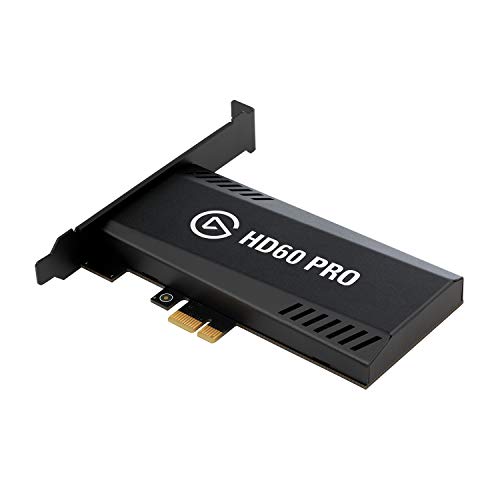
Proven PCIe Value – Elgato HD60 Pro
If your setup targets 1080p, the Elgato HD60 Pro remains a straightforward option among capture cards with passthrough for PC and console use. It offers 1080p60 capture, true passthrough for lag-free play, and direct-to-hard-drive recording through a PCIe connection.
Best For: Windows users who need reliable 1080p60 internal capture and passthrough.
Pros:
- Captures gameplay at 1080p60.
- Provides true passthrough for low-lag console gaming.
- Instant Gameview is designed for an ultra-low-latency workflow.
- Supports unlimited recording to a hard drive and Flashback Recording.
Cons:
- Limited to 1080p60 rather than 4K capture or high-refresh passthrough.
- Requires an internal PCIe installation.
The HD60 Pro makes sense for a dedicated 1080p streaming PC, especially when internal installation and dependable passthrough are preferable to newer 4K features.
Budget USB Pick – Guermok 4K60 Capture Card
For a compact and flexible option, the Guermok GM-72A provides capture cards with passthrough for PC, consoles, cameras, and other HDMI devices. It supports 4K60 passthrough, high-refresh 1440p120 and 1080p120 input, and plug-and-play USB connectivity across several operating systems.
Best For: Budget-conscious creators who want portable capture with broad device and software compatibility.
Pros:
- Offers 4K60 passthrough and up to 4K60 MJPEG capture.
- Supports 1440p120 and 1080p120 high-refresh input.
- Works without drivers on Windows, macOS, Linux, Android, and PadOS.
- Includes 3.5mm audio input and microphone output.
Cons:
- USB 2.0 ports are limited to up to 1080p resolution.
- 4K capture formats and frame rates vary by mode, including 4K25 for YUY2.
- Requires USB 3.0 or higher for the advertised high-resolution performance.
The GM-72A is a practical choice for portable streaming and device capture, provided your computer has a suitable USB 3.0 connection and your needs fit its format limitations.
Best All-Around 4K Passthrough – ASUS TUF CU4K30
The ASUS TUF CU4K30 is a practical choice if you need capture cards with passthrough for PC and want strong console output quality without installing extra drivers. It supports 4K HDR passthrough at 60 Hz while capturing up to 4K at 30 fps, with higher frame rates available at lower resolutions.
Best For: PC streamers who want 4K HDR passthrough, OBS compatibility, and flexible capture settings for PS5, Xbox, or Switch.
Pros:
- Supports 4K HDR passthrough at 60 Hz.
- Captures up to 4K at 30 fps, 2K at 60 fps, or Full HD at 120 fps.
- Plug-and-play UVC connection over USB 3.2 Type-C requires no extra drivers.
- Controller and headset connections can pass team communication audio to the audience.
Cons:
- 4K capture is limited to 30 fps.
- Requires a compatible USB 3.2 Type-C port and a system meeting OBS requirements.
- The supplied operating-system details list Windows compatibility.
Its durable alloy shell, certified OBS compatibility, and broad resolution support make the CU4K30 a balanced option for PC-based recording and livestreaming. Choose it if 4K60 passthrough matters more than capturing 4K at 60 fps.
Best for High-Refresh Gaming – Elgato 4K X
The Elgato 4K X is built for PC setups that prioritize high-refresh gameplay and advanced passthrough. Among capture cards with passthrough for PC, it stands out with HDMI 2.1, VRR passthrough, 4K144 capture and passthrough support, and up to 1080p240 capture.
Best For: High-refresh-rate PC gamers and creators using PS5, Xbox Series X, or other HDMI 2.1 devices.
Pros:
- Supports 4K144 capture and passthrough.
- HDMI 2.1 supports high frame rates up to 240 fps at 1080p.
- VRR passthrough helps reduce screen tearing during gameplay.
- Works with OBS, Streamlabs, Twitch Studio, Zoom, Teams, and other listed apps.
Cons:
- Requires a USB 3.2 Gen 2 port for its intended performance; USB 3.2 Gen 1 reduces capture resolution.
- System requirements include a relatively recent CPU and a GTX 10-series-or-better GPU or equivalent.
- Its capabilities may exceed the needs of users who only capture standard 1080p video.
With ultra-low latency, HDR10, and VRR support, the 4K X is the most performance-focused option in this group. It is the stronger fit for high-refresh displays, though its hardware requirements should be checked before purchase.
Best Compact 4K60 Option – Elgato 4K S
The Elgato 4K S offers a straightforward route to high-quality console capture on a PC. It supports 4K60 capture, 1440p120 or 1080p240 passthrough, HDR10, and near-zero latency, making it a useful choice among capture cards with passthrough for PC.
Best For: PC creators capturing PS5, Xbox Series X/S, Switch 2, and similar consoles who want 4K60 recording and high-frame-rate passthrough.
Pros:
- Captures video at 4K60.
- Supports 1440p120 or 1080p240 passthrough.
- HDR10 support includes tone mapping on Windows.
- Analog audio input can capture in-game chat or commentary.
Cons:
- Supplied Windows compatibility is listed for Windows 11, with macOS 13 or later also supported.
- Requires a USB 3.0 Type-C port and a compatible modern CPU and GPU.
- The listed capture resolution specification is 1080p despite the stated 4K60 capture capability.
The 4K S combines 4K60 recording with high-frame-rate passthrough in a compact USB-C design. Its analog audio input is particularly useful for commentary and chat, while the platform requirements make it best suited to newer systems.
High-Frame-Rate Pick – ezcap333P 4K Capture Card
For shoppers comparing capture cards with passthrough for pc, the ezcap333P stands out for its combination of 4K60 passthrough, high-frame-rate capture, and flexible audio connections. It can record 4K at 60fps or 1080p at 120fps, while its HDMI loop-out is designed for low-latency gameplay.
Best For: PC streamers and gamers who want 4K60 passthrough, 1080p120 capture, and built-in audio mixing options.
Pros:
- Captures up to 4K60 or 1080p120.
- Offers 4K60 HDMI passthrough with ultra-low latency.
- Includes mic, headset, and line-in connections.
- Works with Windows, macOS, OBS, Twitch, YouTube, and Discord.
Cons:
- Requires a USB 3.0 port and comparatively capable computer hardware.
- Some listed features require the included ezcap Link app.
The ezcap333P is the most feature-rich option here for high-refresh gameplay and more involved streaming audio setups. Check your computer against its stated system requirements before buying.
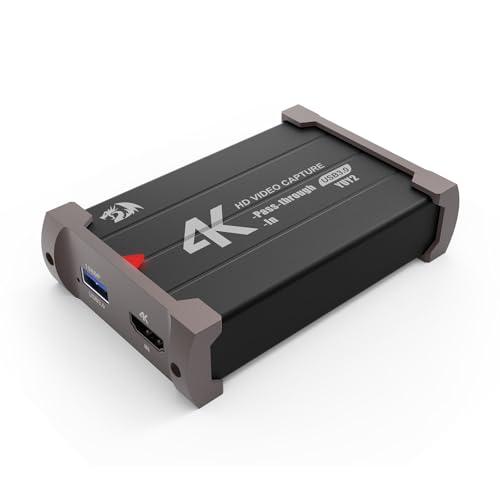
Simple 4K Passthrough Pick – Redragon VC321 Capture Card
The Redragon VC321 is a straightforward choice among capture cards with passthrough for pc. It accepts up to 4K30 input, captures at 1080p60, and provides zero-latency HDMI passthrough for monitoring gameplay while recording or streaming.
Best For: Gamers and creators who want easy 1080p60 capture with 4K HDMI passthrough.
Pros:
- Supports 4K30 input and 1080p60 capture.
- Provides zero-latency HDMI passthrough.
- Plug-and-play setup without additional drivers or power.
- Compatible with Windows 7 and newer and macOS 10.15 and newer.
Cons:
- Capture resolution is limited to 1080p.
- Its listed compatibility and features are more basic than the ezcap333P.
Choose the VC321 if reliable passthrough and uncomplicated setup matter more than 4K recording. It supports a broad range of consoles and cameras while keeping the capture workflow simple.
Budget Loop-Out Option – VIXLW 4K HDMI Capture Card
This VIXLW capture card is a practical budget-oriented option for capture cards with passthrough for pc. It captures up to 1080p and supports 4K input, while its HDMI loop-out is intended to let you play without added delay. A 3.5mm microphone input also supports basic commentary.
Best For: PC users seeking plug-and-play 1080p capture with HDMI loop-out and microphone support.
Pros:
- Supports 4K30/60Hz and 1080p120/144Hz input.
- Provides HDMI loop-out for low-delay gameplay.
- Requires no driver or external power supply.
- Includes a 3.5mm mic input for commentary.
Cons:
- Maximum capture output is 1080p.
- Output supports up to 2K30Hz, and 4K120/144Hz is not supported.
- Listed warranty coverage is 60 days.
The VIXLW makes sense for basic streaming and recording when 1080p capture is sufficient. Pay close attention to its input and output limits, especially if you use a high-refresh 4K display.
How We Picked the Best Capture Cards with Passthrough for PC
We focused on capture cards that support passthrough, allowing the original HDMI signal to continue to a monitor or television while the PC receives a separate capture feed. Our comparison considers supported input and passthrough resolutions, maximum refresh rates, HDR and variable-refresh compatibility, connection type, latency, recording quality, and setup requirements.
We also included a range of designs. Internal PCIe cards can provide a tidy, dependable installation, while USB models are easier to move between systems and suit laptops or compact desktops. Because advertised specifications can vary by resolution and mode, confirm the manufacturer’s limits for the exact console, graphics card, display, and software combination you plan to use.
Quick Comparison
| Type | Best suited to | Main advantage | Potential limitation |
|---|---|---|---|
| PCIe internal | Dedicated desktop streaming PCs | Stable connection and low cable clutter | Requires an available slot and installation |
| USB 3.0 or USB-C | Laptops, flexible setups, and multiple PCs | Portable and simple to connect | Performance depends on the USB port and bandwidth |
| HDMI 2.1 | 4K high-refresh console or PC gaming | Supports demanding modern video signals | Usually costs more and needs compatible cables |
| 1080p-focused | HD streaming and budget setups | Lower cost and simpler requirements | Not ideal for 4K capture or future upgrades |
Key Buying Factors for Capture Cards with Passthrough for PC
Passthrough Resolution and Refresh Rate
Check both capture and passthrough specifications. A card may capture at 4K while passing through a higher refresh rate, or pass through 4K at 120Hz while recording at a lower resolution. If you play competitive games, prioritize the refresh rate and latency of the passthrough signal.
HDMI Version, HDR, and VRR
HDMI 2.1 is important for many 4K 120Hz or 144Hz setups. HDR and variable refresh rate support can also affect compatibility, especially with current consoles and gaming monitors. Make sure the card, display, source device, and cables support the features you want to use together.
Connection and Software Compatibility
USB cards should connect to a suitably fast USB 3.x port without relying on an overloaded hub. Internal cards need an open PCIe slot and adequate airflow. For streaming, verify compatibility with OBS or your preferred software, then check whether the device appears as a standard video source or requires dedicated drivers.
Capture Quality and Audio
Consider whether you need 1080p60, 4K60, or higher-resolution capture, as well as clean stereo or multichannel audio. A high-quality passthrough does not automatically mean the recording feed has the same resolution or color depth.
Who Should Buy Which Capture Cards with Passthrough for PC?
Choose an HDMI 2.1 model if you use a PS5, Xbox Series X, modern gaming PC, or high-refresh 4K monitor and want to preserve demanding video modes. A PCIe card is a strong choice for a permanent desktop streaming station, while a USB model is better for creators who switch computers or prefer plug-and-play installation.
For standard 1080p streaming, an affordable USB capture card can be sufficient and easier to configure. If you want a longer upgrade path, prioritize 4K passthrough, 60fps capture, broad HDR support, and verified compatibility with your display and streaming software rather than choosing solely by the lowest price.