The best voice recorders for beginners make it easy to capture lectures, meetings, interviews, and personal notes without a steep learning curve. The models in this roundup cover simple playback devices, high-capacity recorders, voice activation, noise reduction, and newer AI transcription features.
Use the buying guide below to compare storage, battery life, controls, audio quality, and portability before choosing the recorder that fits your routine.
Best 10 Voice Recorders for Beginners Picks for 2026
Best Overall Capacity

- 64GB storage for extended recording
- One-touch operation with voice activation
- A-B repeat and variable-speed playback
Best For: Beginners who want generous storage and room to explore advanced features
Best Smart Features

- One-tap recording for meetings and ideas
- AI transcription, summaries, and action items
- Up to four days of battery life
Best For: Beginners who want automated notes and conversation organization
Best Budget-Friendly Starter
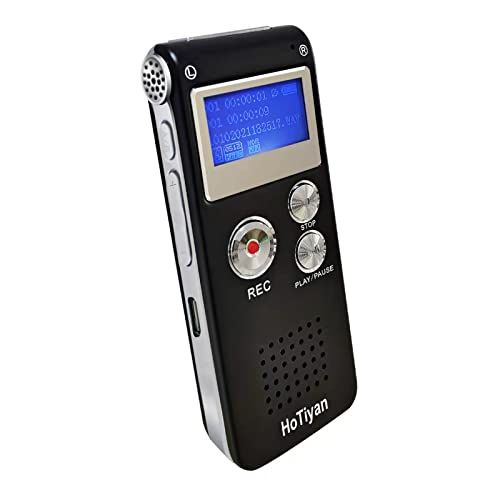
- Simple three-button operation
- Voice activation and A-B repeat
- Compact 1.6-ounce design with MP3 playback
Best For: First-time users who need basic lecture and meeting recording
Best Simple One-Click Design

- Clear one-click recording workflow
- 32GB built-in memory with no TF card
- Includes earphones and external microphone
Best For: Beginners who want portable recording with minimal setup
Best High-Capacity Pick
Compact Magnetic Voice Recorder

- 128GB storage advertised for up to 1,600 hours
- Up to 70 hours of battery life
- One-touch recording with magnetic mounting
Best For: Beginners needing long recording time and flexible placement
Best Feature-Rich Pick

- 1536 kbps PCM recording with noise reduction
- Large capacity and up to 68-hour battery life
- LCD screen, voice activation, and A-B repeat
Best For: Beginners wanting guided controls and advanced playback features
Best Simple Starter
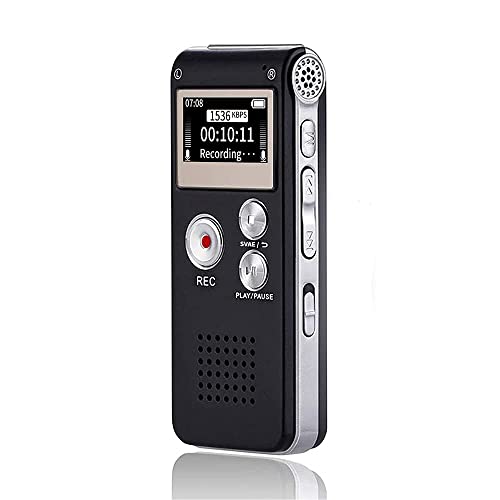
- Simple REC, STOP, and PLAY controls
- Up to 30 hours of recording
- Lightweight design with voice activation
Best For: First-time users who prefer straightforward physical controls
Best Lightweight Pick
Compact Xelarvex 72GB Recorder

- Voice activation saves storage space
- AI noise reduction for clearer audio
- About 1 ounce with up to 48-hour recording
Best For: Students and professionals needing a lightweight everyday recorder
Best Easy-Start Option
Tonfarb 64GB Recorder with Playback

- One-click start and save controls
- WAV PCM recording with noise reduction
- Screen, playback, and password protection
Best For: Beginners who want simple controls plus playback and file tools
Best Simple Pick

- 128GB storage for extensive recording archives
- Six voice-activation sensitivity levels
- Multiple formats, folders, and password protection
Best For: Users storing frequent lectures, meetings, and interviews
Best Overall Capacity – EVISTR 64GB Voice Recorder
For beginners comparing voice recorders for beginners, the EVISTR L357 offers a straightforward control layout with substantial storage and useful playback tools. It records in MP3 or WAV, supports voice activation, and transfers files to Windows or Mac through USB-C.
Best For: Students, teachers, interviewers, and anyone who needs long recording sessions with flexible playback.
Pros:
- 64GB storage can hold up to 4,660 hours at 32Kbps.
- One-touch recording, adjustable voice activation, and seven recording-gain levels.
- Supports A-B repeat, variable-speed playback, scheduled recording, and USB-C file transfer.
- Offers up to 32 hours of continuous recording and 35 hours of playback according to the supplied notes.
Cons:
- The many settings may take longer for a complete beginner to learn.
- Its highest-quality 1536Kbps mode will use storage more quickly than lower-bitrate modes.
The L357 is a versatile choice when storage and recording flexibility matter most. Its simple record-and-save workflow keeps the basics approachable, while the deeper settings give you room to grow.
Best Smart Features – Pocket AI Voice Recorder
The Pocket takes a different approach to voice recorders for beginners by pairing one-tap recording with AI transcription, summaries, and searchable insights. It is designed for people who want to turn conversations into organized notes rather than manage audio files manually.
Best For: iPhone and Android users who want automated meeting notes, action items, and conversation summaries.
Pros:
- One-tap recording is designed for quick, interruption-free capture.
- Can transcribe recordings and create summaries, action items, and conversation maps.
- “Ask Pocket” lets users query information grounded in their recordings.
- MagSafe compatibility supports convenient hands-free use, and the battery lasts up to four days.
Cons:
- Additional premium features are available through an optional subscription.
- Its smartphone-focused workflow may be less suitable for users seeking a traditional standalone recorder.
Pocket is best suited to beginners who value organization and productivity over traditional recorder controls. If you want recordings converted into usable notes with minimal manual work, its AI-focused design is the main attraction.
Best Budget-Friendly Starter – HoTiyan 8GB Digital Recorder
The HoTiyan H-10001 is a compact entry-level option for voice recorders for beginners, with three-button operation and a built-in microphone. It covers the basics—recording, playback, voice activation, and USB file transfer—while also functioning as an MP3 player.
Best For: Students and first-time users who need an inexpensive recorder for lectures, meetings, or short interviews.
Pros:
- Simple three-button design supports quick recording, saving, and playback.
- Voice activation can reduce silent sections and conserve storage.
- Includes A-B repeat, variable playback speed, password protection, and timestamped filenames.
- Small 1.6-ounce body includes a headphone jack and Micro USB transfer.
Cons:
- 8GB capacity is considerably smaller than the higher-capacity options in this roundup.
- Battery supports up to 20 hours of continuous recording, according to the supplied notes.
- Uses a Micro USB connection rather than USB-C.
This model keeps the learning curve low and provides useful study features without an elaborate interface. It is a sensible starting point if you mainly need basic recording and playback rather than extensive storage.
Best Simple One-Click Design – Cappsu 32GB Voice Recorder
For beginners seeking voice recorders for beginners with minimal setup, the Cappsu V02 centers on a clear one-click recording process. It combines 32GB of built-in storage with voice activation, USB-C charging, a headphone jack, and included external recording accessories.
Best For: Beginners who want a portable recorder with uncomplicated controls for classes, meetings, interviews, and daily notes.
Pros:
- One-click start and stop controls make the basic workflow easy to understand.
- 32GB built-in storage requires no TF card.
- 1536Kbps recording, voice activation, and A-B repeat support detailed capture and review.
- Includes a USB-C cable, 3.5mm earphones, and an external microphone.
Cons:
- Continuous recording is rated for up to 20 hours per charge.
- The simplest operation leaves fewer listed customization features than the EVISTR model.
The Cappsu V02 is a strong fit when ease of use is more important than a large menu of controls. Its small size, included accessories, and built-in memory make it ready for everyday beginner use.
Best High-Capacity Pick – Compact Magnetic Voice Recorder
For shoppers comparing voice recorders for beginners, the Nanezan NZ007 emphasizes simple controls, unusually large storage, and long battery life. Its one-touch recording switch and included instructions make it approachable for lectures, meetings, interviews, and everyday notes.
Best For: Beginners who want extended recording capacity, a compact design, and flexible placement on metal surfaces.
Pros:
- 128GB capacity is advertised for up to 1,600 hours of recording.
- Up to 70 hours of battery life supports extended use.
- Built-in magnet attaches to compatible metal surfaces.
- One-touch recording, USB-C connectivity, and a 3.5mm headphone jack simplify use.
Cons:
- Its built-in microphone records in mono.
- The magnetic design is useful only where a suitable metal surface is available.
- The listed dimensions are presented unusually, so verify the physical size before buying.
The NZ007 is a practical starter option when storage and battery endurance matter most. Its compact, lightweight body and straightforward controls reduce the learning curve, while the magnetic mounting adds flexibility for certain recording setups.
Best Feature-Rich Pick – Large-Screen Voice Recorder
The Tonfarb A20 is a strong choice for beginners who want more guidance and playback control than a basic recorder provides. Its large, easy-to-read screen, one-click controls, voice activation, and USB-C file transfer make it suitable for classes, interviews, meetings, and personal audio notes.
Best For: New users who want a screen, noise-reduction features, extended battery life, and convenient playback tools.
Pros:
- Supports 1536 kbps PCM recording with dual microphones and automatic noise reduction.
- Includes 8GB internal storage plus a complimentary 128GB TF card, with up to 9,775 hours advertised in MP3 format.
- Up to 68 hours of continuous recording on its 1100mAh rechargeable battery.
- Offers voice activation, A-B repeat, password protection, and a 1.44-inch LCD screen.
Cons:
- The advertised total capacity depends on the included TF card and recording format.
- At about 97–100 grams, it is heavier than the smallest beginner recorders.
- The listing provides different interface details for USB connectivity, so confirm compatibility with your setup.
The A20 suits beginners who value visible menus and built-in controls over the simplest possible design. It offers a broad feature set for the price, particularly for users who need long sessions and easy access to recorded segments.
Best Simple Starter – 16GB Playback Recorder
For beginners seeking voice recorders for beginners without a complicated interface, this Sunlan model keeps the essentials prominent: press REC to start, STOP to finish, and PLAY to listen. It also adds voice activation, noise reduction, and direct USB file transfer for lectures, meetings, and interviews.
Best For: First-time users who want a lightweight recorder with physical controls and built-in playback.
Pros:
- Simple REC, STOP, and PLAY operation is easy to learn.
- 16GB storage and up to 30 hours of continuous recording suit routine note-taking.
- DSP noise reduction and 1536 kbps recording are designed for clearer speech capture.
- Includes voice activation, A-B repeat, a speaker, music playback, and USB storage functionality.
Cons:
- Its 16GB capacity is substantially smaller than the higher-capacity options in this roundup.
- Battery life is listed at about 30 hours of recording and 7 hours of playback.
- The listed recording format is WAV, which can use more storage than compressed formats.
This is the most straightforward option of the three for someone learning the basics of digital recording. Its small, 35-gram design and physical controls keep operation simple, though users recording frequently may prefer more storage or longer battery endurance.
Best Lightweight Pick – Compact Xelarvex 72GB Recorder
For shoppers comparing voice recorders for beginners, the Xelarvex emphasizes simple portability and hands-off recording. Its voice activation, large stated storage capacity, and AI noise reduction make it practical for lectures, meetings, and everyday notes.
Best For: Students and professionals who want a lightweight recorder with voice activation and long battery life.
Pros:
- Voice activation helps reduce silent gaps and conserve storage.
- AI noise cancellation is designed to reduce ambient noise.
- Weighs about 1 ounce and includes USB-C connectivity.
- Offers up to 48 hours of continuous recording according to the supplied specifications.
Cons:
- The built-in microphone and limited listed controls may offer less flexibility than models with external recording options.
- The supplied information contains inconsistent storage wording, so confirm the exact capacity before buying.
This is a convenient beginner option when small size and automated recording matter most. Its feature set is focused on straightforward capture rather than advanced file-management tools.
Best Easy-Start Option – Tonfarb 64GB Recorder with Playback
The Tonfarb is a strong choice among voice recorders for beginners because its side button starts and saves recordings with one motion. A large screen, playback, voice activation, and password protection give new users useful guidance without sacrificing practical features.
Best For: Beginners recording lectures, interviews, meetings, or personal notes who want clear controls and on-device playback.
Pros:
- One-click recording and saving works even when the device is powered off.
- Supports WAV PCM recording up to 1536kbps and automatic noise reduction.
- Large 1.44-inch screen, password protection, and voice activation improve usability.
- Includes file segmentation, scheduled recording, A-B repeat, bookmarking, and MP3 playback.
Cons:
- The recorder is larger than the lightest pocket-focused models at 4 inches long and 0.47 inches deep.
- Its many functions may require more setup than a basic record-and-save device.
With accessible controls and a broad feature set, this model offers room to grow as a beginner learns more recording options. It is particularly useful for users who want to review files directly on the recorder.
Best Simple Pick – EVIDA 128GB Lecture Recorder
For voice recorders for beginners who expect to store many files, the EVIDA provides a large 128GB capacity and straightforward voice-activated operation. It also supports several recording quality settings, password protection, and organized folder storage.
Best For: Students, teachers, writers, and business users who need substantial storage for lectures, meetings, speeches, or interviews.
Pros:
- 128GB storage is rated for up to 9,296 hours of recording.
- Voice activation offers six sensitivity levels to help limit blank sections.
- Supports MP3 recording at 128kbps or 192kbps and WAV recording at 1536kbps.
- Includes password protection, A-B repeat, bookmarks, four-folder file management, and MP3-player functionality.
Cons:
- The supplied details list no headphone jack, which may limit convenient private playback.
- At 3.35 ounces, it is heavier than the compact Xelarvex model.
- Its larger feature set and multiple recording formats may take longer for a first-time user to learn.
The EVIDA is best suited to beginners who value capacity and organization over minimalism. Its adjustable activation levels and customer phone support can also help new users get started.
How We Picked the Best Voice Recorders for Beginners
We focused on features that matter most to first-time buyers: straightforward controls, dependable recording, easy playback or file transfer, useful storage capacity, and practical battery performance. We also considered different use cases, including classes, business meetings, interviews, dictation, and discreet everyday carry.
Storage claims can vary by recording format and quality setting, so treat advertised hour totals as estimates rather than guaranteed real-world capacity. A recorder with fewer headline hours may still be the better choice if it offers clearer sound, simpler controls, or faster file management.
Quick Comparison
| Feature | Best for | What to look for |
|---|---|---|
| Basic playback | First-time users | Large buttons, built-in speaker, simple menus |
| Voice activation | Lectures and meetings | Adjustable sensitivity and reliable start/stop detection |
| Large storage | Frequent recording | Clearly labeled capacity and easy USB transfer |
| Noise reduction | Busy rooms | Selectable recording modes and microphone controls |
| AI transcription | Fast note creation | Supported languages, app requirements, and subscription terms |
Key Buying Factors for Voice Recorders for Beginners
Ease of Use
Choose a model with a dedicated record button, readable display, and menus you can understand without consulting the manual constantly. Built-in playback is useful when you need to check a recording immediately.
Audio Quality and Microphone Performance
For classrooms and meetings, microphone placement matters as much as advertised specifications. Look for adjustable recording quality, noise reduction, and a microphone that suits the expected distance. A recorder designed for close dictation may perform differently across a conference table.
Storage and File Transfer
Higher capacity is helpful for frequent recording, but only if files are easy to organize and move. USB-C can be more convenient with newer computers and phones, while some devices use a built-in USB plug or older connector. Check whether recordings use a widely compatible format such as MP3 or WAV.
Battery Life and Charging
Consider how long your typical sessions last and whether you can recharge between them. A battery indicator, USB charging, and a low-battery warning reduce the chance of missing an important lecture or interview.
Privacy and Security
If recordings contain personal, academic, or business information, password protection can be valuable. Also review local recording-consent laws before recording conversations, meetings, or interviews.
Who Should Buy Which Voice Recorders for Beginners?
For Students and Lecture Recording
Prioritize voice activation, long battery life, clear playback, and enough storage for a full term. A compact recorder with simple controls is usually easier to use than an overcomplicated model.
For Meetings and Interviews
Choose a recorder with a capable microphone, noise-reduction options, and quick file transfer. If you need written notes quickly, an AI recorder may be worthwhile, provided its transcription service fits your privacy and budget requirements.
For Dictation and Personal Notes
A smaller device with one-touch recording, easy playback, and modest storage may be all you need. Avoid paying extra for features you will not use.
For Heavy Recording Schedules
Look for dependable battery capacity, generous storage, clear file organization, and a charging connection that matches your existing accessories. The best option is the one you can operate confidently and retrieve recordings from quickly.