Finding the right music for worship can mean balancing service needs, playing ability, denominational style, and preparation time. This collection brings together piano and organ repertoire, pattern-based resources, and broader church-music guidance.
Whether you need short preludes and postludes, accessible training material, contemporary praise arrangements, or a more complete reference, these selections offer practical ways to strengthen your church music library.
Best 10 Samplers for Church Musicians Picks for 2026
Best Sacred Piano Sampler

- 30 intermediate sacred piano arrangements
- Traditional hymns and modern worship songs
- Useful for preludes, offertories, and postludes
Best For: Intermediate church pianists building worship repertoire
Best General-Use Organ Sampler
The Church Organist's Library, Vol. 1

- Easy organ music from multiple periods
- Manual-only and easy-pedal selections
- Urtext editions used when possible
Best For: Organists needing accessible general service music
Best Contemporary Praise Sampler
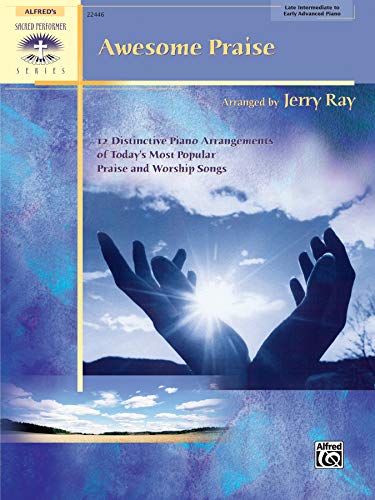
- 12 distinctive praise and worship arrangements
- Covers meditative to jubilant moods
- Late-intermediate to early-advanced level
Best For: Advanced pianists performing contemporary worship music
Best Large Organ Service Sampler

- 50 short works for church services
- Includes seasonal and special-occasion music
- Complete organ registrations throughout
Best For: Organists building a versatile service library
Foundational Hymn Study
Level 2 Church Musician Piano Library

- Builds on Level 1 piano concepts
- Covers five major keys and chord inversions
- Pairs hymns with technique and musicianship exercises
Best For: Students developing foundational piano skills for church hymn playing
Service-Ready Repertoire

- Includes 23 sacred solos and two medleys
- Designed for intermediate to advanced pianists
- Works for services, special events, and recitals
Best For: Pianists preparing preludes, postludes, and recital-style church performances
Beginner Organ Collection
Church Musician Organ Repertoire

- Designed as a Level 1 collection
- Compact 32-page format
- Selected for Federation Festivals 2011–2013
Best For: Beginning organists building an introductory church repertoire
Practical Pattern Library
Church Piano Patterns in 12 Keys
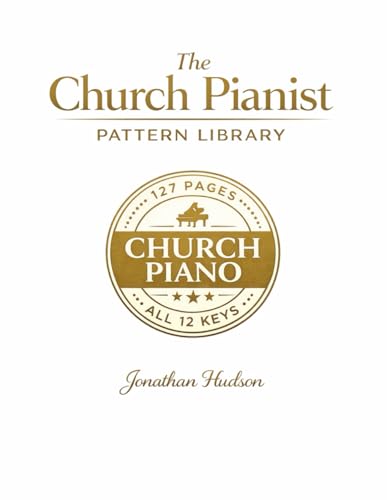
- 127-page resource for hymn and worship accompaniment
- Includes patterns, progressions, walks, and runs
- Designed for beginner to intermediate pianists
Best For: Church pianists building a dependable accompaniment toolbox
Comprehensive Church Music Guide
Music and Worship in the Church

- Broad resource for church music participants
- Includes solo and anthem lists
- Features a bibliography and glossary
Best For: Musicians, ministers, and laypeople wanting a general reference
Level 3 Piano Method

- Step-by-step approach to music fundamentals
- Uses familiar and new sacred music
- Part of a series with supporting books
Best For: Level 3 piano students developing sacred-music skills
Best Sacred Piano Sampler – Sunday Solos for Piano
For church musicians seeking samplers for church musicians in a piano format, Sunday Solos for Piano offers 30 intermediate-level arrangements for worship services and personal use. Its mix of traditional hymns and contemporary worship songs makes it a flexible repertoire builder.
Best For: Intermediate church pianists needing preludes, offertories, postludes, or devotional repertoire.
Pros:
- Includes 30 sacred piano arrangements.
- Covers traditional hymns and modern worship favorites.
- Suitable for preludes, offertories, postludes, recitals, and personal reflection.
Cons:
- Designed for intermediate players, so it may not suit complete beginners.
- It is a piano solo collection rather than an organ or ensemble resource.
This is a practical choice when you want one approachable book that supports both traditional and blended worship settings.
Best General-Use Organ Sampler – The Church Organist's Library, Vol. 1
Among samplers for church musicians, The Church Organist’s Library, Vol. 1 is aimed at organists who want accessible service music from multiple historical periods. The anthology emphasizes manual-only pieces and works with easy pedal, making it suitable for practical church use.
Best For: Organists seeking easy general-use music for services, especially manual-only or easy-pedal repertoire.
Pros:
- Contains easy organ music from all historical periods.
- Includes manual-only works and pieces with easy pedal.
- Uses Urtext editions whenever possible, with editorial notes identified.
Cons:
- The collection focuses on general-use organ music rather than specifically categorized seasonal selections.
- Its publication date is 1985, which may matter to buyers seeking a newer edition.
Choose this volume for a historically broad, straightforward organ anthology that can support regular service planning.
Best Contemporary Praise Sampler – Awesome Praise
For church musicians comparing samplers for church musicians centered on current worship, Awesome Praise provides 12 distinctive piano arrangements of popular praise and worship songs. The collection ranges from prayerful and meditative to driven and jubilant, with late-intermediate to early-advanced difficulty.
Best For: Late-intermediate to early-advanced pianists preparing contemporary worship, offertory, recital, or wedding music.
Pros:
- Features 12 arrangements of popular praise and worship songs.
- Offers varied moods, including meditative, majestic, and jubilant settings.
- Works for teaching, individual enjoyment, offertories, postludes, recitals, and weddings.
Cons:
- The late-intermediate to early-advanced level may be demanding for developing players.
- With 12 selections, it is shorter than some larger anthologies.
This collection is a strong fit when contemporary worship style and expressive performance matter more than having a large number of pieces.
Best Large Organ Service Sampler – The Practical Organist
The Practical Organist: 50 Short Works for Church Services (Dover Music for Organ)
Check Price On AmazonThe Practical Organist stands out among samplers for church musicians because it combines 50 short works with practical service categories. The 240-page collection includes music for preludes, offertories, postludes, communion, weddings, Christmas, and funerals, along with complete organ registrations.
Best For: Organists who need a broad, economical library of short selections for regular services and special occasions.
Pros:
- Provides 50 brief liturgical works.
- Covers services and occasions including communion, Christmas, weddings, and funerals.
- Includes complete organ registrations throughout.
Cons:
- The collection is organ-focused and will not serve pianists seeking solo piano arrangements.
- Its broad occasion coverage may be more than needed for buyers wanting only standard weekly service music.
With its substantial page count and detailed registrations, this is the most comprehensive option here for organists building a versatile service library.
Foundational Hymn Study – Level 2 Church Musician Piano Library
For church musicians looking for structured samplers for church musicians, The Church Musician: Level 2 combines familiar sacred songs with progressive piano instruction. It builds on Level 1 through five major keys, chord inversions, eighth notes, transposition, and pedal work.
Best For: Students developing foundational piano skills for church hymn playing.
Pros:
- Includes familiar hymns such as “Jesus Lover of My Soul” and “Joy to the World.”
- Introduces I, IV, and V chords with inversions and transposition.
- Develops musicianship through dynamics, pedal experimentation, scales, and technic exercises.
Cons:
- Level 2 assumes skills learned in the preceding volume.
- The 52-page book focuses on instructional progression rather than advanced service repertoire.
This is a practical choice for learners who want sacred repertoire integrated with technique and theory. It is less suited to experienced church pianists seeking demanding standalone arrangements.
Service-Ready Repertoire – Solos for the Sanctuary
For pianists comparing samplers for church musicians at an intermediate to advanced level, Solos for the Sanctuary Preludes and Postludes offers expressive arrangements for services, special events, and recitals. Its 23 selections combine sacred melodies with classical elements, surprising harmonies, and jazz undertones.
Best For: Intermediate to advanced pianists preparing preludes, postludes, and recital-style church performances.
Pros:
- Provides 23 sacred solos, including two medleys.
- Includes a broad selection of familiar hymns and worship standards.
- Offers arrangements ranging from readily playable pieces to more challenging works.
Cons:
- The collection is aimed at intermediate to advanced players, not beginners.
- Some arrangements require additional practice to master.
With its combination of practical service use and stylistic variety, this collection can expand a worship pianist’s performance library. Choose it when expressive arrangements matter more than step-by-step instruction.
Beginner Organ Collection – Church Musician Organ Repertoire
For organists searching for accessible samplers for church musicians, Church Musician Organ Repertoire: Level 1 is a concise introductory collection. Its Level 1 designation makes it a starting point for developing church-organ repertoire, and it was selected for Federation Festivals 2011–2013.
Best For: Beginning organists building an introductory church repertoire.
Pros:
- Clearly positioned as a Level 1 collection.
- Offers a compact 32-page format for focused study.
- Received Federation Festivals 2011–2013 selection recognition.
Cons:
- The supplied details do not list the individual pieces included.
- Its introductory level may not challenge experienced organists.
This is a sensible entry-level option when you want a short organ repertoire book rather than an extensive advanced collection. Review the available contents before buying if specific hymns or service pieces are essential.
Practical Pattern Library – Church Piano Patterns in 12 Keys
The Church Pianist Pattern Library: The Practical Church Piano Resource Book in All 12 Keys
Check Price On AmazonFor church musicians comparing samplers for church musicians, this 127-page resource offers a focused collection of repeatable piano patterns for hymns and simple worship music. Its organized examples can help players move beyond basic chords and build a practical accompaniment toolkit.
Best For: Beginner to intermediate church pianists who want ready-to-practice patterns, chord progressions, and accompaniment ideas.
Pros:
- Includes 33 left-hand patterns, 27 rhythm patterns, and 40 accompaniment patterns.
- Provides left-hand walks and runs plus accompaniment patterns in all 12 keys.
- Can serve as a daily practice guide, Sunday reference, or hymn-learning aid.
Cons:
- It is specifically focused on piano accompaniment rather than broader church-music topics.
- Its publication date is February 2026, so availability may vary.
This is the most directly practical choice for pianists who want a structured pattern library they can apply to worship playing without overly complex arrangements.
Comprehensive Church Music Guide – Music and Worship in the Church
Music and Worship in the Church: The Complete Resource of Musician, Minister and Layperson
Check Price On AmazonAmong samplers for church musicians, this revised and enlarged guide takes the broadest approach. Rather than concentrating on piano technique, it addresses the wider work of providing music for the church and includes reference material for musicians, ministers, and laypeople.
Best For: Church music teams, ministers, and laypeople seeking a broad reference on music and worship.
Pros:
- Described as a comprehensive discussion of church music.
- Includes lists of solos and anthems for reference.
- Offers a bibliography and glossary alongside the main material.
Cons:
- Published in 1987, so some perspectives or resources may feel dated.
- It is a general church-music reference rather than a hands-on piano method.
Choose this book when your priority is understanding the broader church-music role and finding supporting reference lists, not learning specific accompaniment patterns.
Level 3 Piano Method – The Church Musician: Level 3
For church musicians comparing samplers for church musicians, The Church Musician: Level 3 provides a structured, step-by-step piano approach built around familiar and new sacred music. It is a compact option for developing fundamentals through guided sacred repertoire.
Best For: Piano students ready for a Level 3 instructional book centered on sacred music and foundational skills.
Pros:
- Uses familiar and new sacred music to teach music fundamentals.
- Presents a step-by-step approach for guided progression.
- Supplementary Repertoire, Theory, and Hymn Playing books are available within the series.
Cons:
- At 48 pages, it is less extensive than a comprehensive reference or pattern library.
- The supplied notes identify it as Level 3, so it may not suit complete beginners or advanced players.
This is a sensible fit for learners who want a concise, graded sacred-piano method, especially if they plan to use the related supplementary books.
How We Picked These Samplers for Church Musicians
We selected these resources for practical usefulness across common church-music situations rather than treating every book as interchangeable. The lineup includes piano and organ collections, graded repertoire, service-ready pieces, contemporary worship arrangements, pattern-based accompaniment help, and broader guidance for musicians and worship leaders.
We also considered how easily each type of resource can fit into weekly preparation. Short works may be useful when rehearsal time is limited, while graded books can support developing players over a longer period. Collections organized around worship songs, keys, or service functions may be especially helpful when a musician needs to find usable material quickly.
Quick Comparison
| Resource type | Best suited to | What to look for |
|---|---|---|
| Preludes, offertories, and postludes | Service opening, giving, and closing music | Appropriate difficulty and service length |
| Organ repertoire collections | Organists building a dependable library | Pedal requirements, registration, and style |
| Graded piano or organ books | Students and developing church musicians | Level progression and manageable technique |
| Praise and worship arrangements | Contemporary services and song-based programming | Familiar titles, arrangement style, and vocal compatibility |
| Pattern and reference resources | Accompanists who need flexible tools | Key coverage, transposition help, and practical examples |
Key Buying Factors for Samplers for Church Musicians
Instrument and Playing Level
Confirm whether the material is written for piano, organ, or both. Difficulty labels can vary, so check descriptions for technical demands, pedal work, chord vocabulary, and expected reading ability.
Service Role
Decide where the music will be used. A collection designed for preludes and postludes may not provide the same kind of accompaniment support as a pattern library or graded lesson-oriented book.
Musical Style
Traditional hymn-based writing, sacred solo arrangements, and contemporary praise settings serve different congregations. Choose a style that matches your church’s worship approach and the players who will use the material.
Preparation Time and Flexibility
Short, clearly organized pieces are helpful for weekly services. Resources arranged in multiple keys or built around reusable patterns can offer more flexibility when singers, instruments, or service plans change.
Who Should Buy Which Samplers for Church Musicians?
- Choose a piano prelude and postlude collection if you need immediately usable service music with a clear liturgical function.
- Choose an organ repertoire book if organ is your primary instrument and you want a broader supply of short works for regular services.
- Choose a graded church musician book if you are developing technique or selecting material for a student.
- Choose a praise arrangement collection if your congregation regularly uses current worship songs and recognizable melodies.
- Choose a pattern library if you accompany services and want practical harmonic tools that can be adapted across keys.
- Choose a broader church-music resource if your responsibilities include worship planning, collaboration, or understanding the role of music within congregational life.
The best Samplers for Church Musicians are the ones that match your instrument, ability, worship style, and weekly workload. Prioritize material you can prepare consistently and reuse confidently rather than choosing solely by page count or title familiarity.