Choosing among the best audio equalizers for recording vocals can be challenging when studio interfaces, rack units, digital processors, and karaoke-focused systems all appear in the same search results. The right choice depends on whether you need precise corrective EQ, analog-style hands-on control, vocal effects, or a flexible home-audio processor.
This roundup compares 10 selected products across recording, live sound, DJ, karaoke, and home-stereo use. Use the guide below to match the features that matter most to your microphone, room, mixer, and recording setup.
Best 10 Audio Equalizers for Recording Vocals Picks for 2026
Best Vocal Recording Interface
Focusrite Scarlett Solo 3rd Gen

- Clear mic preamp with switchable Air mode
- 24-bit/192kHz USB recording
- Compact setup with included software
Best For: Home vocalists and podcasters
Best Rack Graphic EQ
Rockville REQ20 Dual 10-Band EQ

- Dual 10-band graphic EQ sections
- 20Hz–20kHz frequency response
- VU meters and RCA record output
Best For: Rack systems needing hands-on stereo EQ
Best Vocal Presence Processor
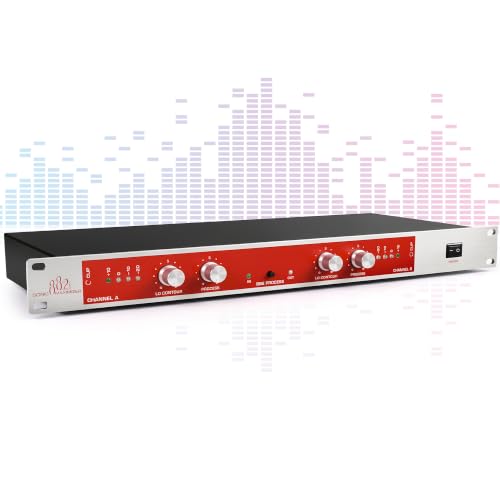
- Independent dual-channel processing
- Treble, bass, and Lo Contour controls
- Balanced XLR and TRS connectivity
Best For: Rack systems needing broad presence enhancement
Best Flexible Digital EQ

- 31-band tuning with spectrum analyzer
- Custom modes and auto-save presets
- Optical, coaxial, and USB connectivity
Best For: Detailed EQ control across studio and entertainment setups
All-in-One Vocal Control

- 13-band EQ with vocal enhancement
- Feedback suppression and echo/reverb
- Wide input and output connectivity
Best For: Vocalists needing EQ, effects, and source control in one unit
Precision Frequency Shaping

- 31 bands per channel for detailed control
- Low-cut filter reduces unwanted low-end noise
- Balanced and unbalanced I/O
Best For: Studio and live users who want manual vocal EQ shaping
Preset Vocal Effects

- 99 presets and 199 sound effects
- Reverb, delay, and chorus processing
- Dual-channel operation with noise reduction
Best For: Vocal setups focused on presets and performance effects
Visual Rack EQ

- 31-band EQ with LED spectrum display
- 10 presets, bypass, and noise reduction
- Bluetooth, USB, XLR, and 1/4-inch connectivity
Best For: Home studios, live audio, DJs, and rack-based systems
Connectivity Pro
31-Band Stereo Graphic Equalizer

- 31-band control with ±12dB adjustment
- Bluetooth 5.4, optical, coaxial, USB, RCA, and XLR
- Dynamic LED display with 12 rhythm modes
Best For: Studios and live systems needing flexible digital connectivity
PC-Tuned Studio EQ
Dual-Channel 31-Band Equalizer

- Dual-channel 31-band control with PC software
- 10 presets plus bypass for A/B comparisons
- DSP noise reduction adjustable from -3dB to -9dB
Best For: Studios and live setups needing software-assisted vocal EQ
Best Vocal Recording Interface – Focusrite Scarlett Solo 3rd Gen
The Focusrite Scarlett Solo 3rd Gen is a practical starting point for anyone building a setup around audio equalizers for recording vocals. Its single XLR microphone preamp, switchable Air mode, and 24-bit/192kHz converters support clear vocal capture before you shape the track with software EQ.
Best For: Home vocalists, podcasters, and musicians who need a compact USB recording interface.
Pros:
- High-performance mic preamp with switchable Air mode for added clarity.
- 24-bit/192kHz recording and low-noise balanced outputs.
- Includes recording software and effects through the Hitmaker Expansion.
Cons:
- Provides one XLR mic preamp, so it is limited for multi-microphone sessions.
- It is an audio interface rather than a dedicated hardware equalizer.
Choose the Scarlett Solo when your priority is clean vocal recording and flexible software-based tone shaping in a small, straightforward package.
Best Rack Graphic EQ – Rockville REQ20 Dual 10-Band EQ
Rockville REQ20 19" Rack Mount Pro Dual 10 Band Graphic Equalizer EQ w/VU Meters
Check Price On AmazonThe Rockville REQ20 is a straightforward hardware option for audio equalizers for recording vocals when you want hands-on control over two stereo channels. Its dual 10-band graphic sections cover 20Hz–20kHz and provide VU meters for monitoring levels.
Best For: Rack-based recording, live sound, and stereo systems needing physical EQ sliders.
Pros:
- Dual 10-band graphic equalizers provide 20 bands total.
- 20Hz–20kHz frequency response covers the audible range.
- Includes dual VU meters and RCA record outputs.
Cons:
- RCA connectivity may be less suitable for balanced professional studio wiring.
- It does not include a microphone preamp or vocal-specific processing.
The REQ20 makes sense when you want visible, immediate EQ adjustments in a rack system, but you will need a separate interface or preamp to record microphones.
Best Vocal Presence Processor – 882i Sonic Maximizer
The 882i is a dual-channel signal processor for adding presence and low-frequency contour, making it a possible companion to audio equalizers for recording vocals. Its treble, bass, and Lo Contour controls can enhance vocal clarity, while balanced connections support studio or rack integration.
Best For: Rack setups that need two-channel harmonic enhancement and selectable vocal presence control.
Pros:
- Independent Channel A and B controls with processed/bypass switching.
- Treble, bass, and Lo Contour controls help shape presence and low end.
- Balanced XLR and 1/4-inch TRS inputs and outputs with low stated THD.
Cons:
- It is a signal processor, not a microphone preamp, audio source, or power amplifier.
- Its enhancement-focused design is less precise than a conventional multi-band vocal EQ.
The 882i is best used after a suitable source or interface when you want broad tonal enhancement and rack-ready connectivity rather than detailed corrective equalization.
Best Flexible Digital EQ – 31-Band Graphic Equalizer
This 31-band graphic equalizer offers extensive tone-shaping flexibility for audio equalizers for recording vocals. Its real-time spectrum analyzer, customizable modes, noise reduction, and multiple digital inputs make it suitable for vocal clarity adjustments in studio, home, KTV, and live setups.
Best For: Users who want detailed digital EQ control, visual frequency monitoring, and preset-based operation.
Pros:
- 31 bands provide detailed adjustment from bass through treble.
- Real-time spectrum analyzer helps visualize frequency changes.
- Offers customizable modes, auto-save presets, and optical, coaxial, and USB connectivity.
Cons:
- The supplied notes do not specify microphone inputs or balanced studio outputs.
- Its broad home, live, and entertainment focus may require compatibility checks before studio integration.
Consider this model when visual EQ control and connection flexibility matter most, but confirm its available inputs and outputs match your vocal recording chain.
All-in-One Vocal Control – DSP Karaoke Mixer
For creators comparing audio equalizers for recording vocals, this DSP karaoke mixer combines 13-band EQ tuning with vocal enhancement, echo/reverb, and feedback suppression. Its broad connectivity and straightforward controls make it a flexible choice for vocal practice, streaming, karaoke, or a compact audio setup.
Best For: Singers, karaoke users, and home or professional setups that want vocal processing plus multiple source inputs.
Pros:
- 13-band EQ provides targeted vocal tone adjustments.
- DSP processing, one-touch vocal enhancement, and feedback suppression support cleaner sound.
- Bluetooth, USB, optical, coaxial, AUX, microphone, XLR, RCA, and subwoofer connections offer setup flexibility.
- LCD display and remote control allow convenient operation.
Cons:
- Its karaoke-focused feature set may be more than needed for simple vocal recording.
- The unit is relatively wide at 17.2 inches, so placement space is required.
This is a practical pick when vocal EQ is only part of the requirement. Choose it over a dedicated rack EQ if you also need effects, source switching, microphone priority, and feedback management in one processor.
Precision Frequency Shaping – 31-Band Stereo EQ
When evaluating audio equalizers for recording vocals, this dual-channel 31-band graphic EQ is designed for detailed frequency shaping. Its adjustable bands, low-cut filter, balanced connections, and level-monitoring LEDs make it suited to studio, live, and installed audio systems where precise control matters.
Best For: Vocal recording and live setups that need extensive manual EQ control across two stereo channels.
Pros:
- 31 adjustable bands per channel allow detailed tonal adjustments.
- Each band offers up to ±12 dB of control.
- Low-cut switch helps reduce wind noise, floor rumble, and electrical hum.
- XLR balanced and 1/4-inch TRS unbalanced connections support varied systems.
Cons:
- It focuses on graphic EQ rather than vocal effects or automatic processing.
- The rack-style chassis is 18.9 inches wide and may require suitable mounting or shelf space.
This is the strongest fit for users who want hands-on frequency control and clear visual feedback. It is less suitable if you prefer presets or an all-in-one vocal processor with reverb and delay.
Preset Vocal Effects – DSP Multi-Effects Processor
For vocalists exploring audio equalizers for recording vocals alongside time-based effects, this DSP processor offers 99 preset programs and 199 sound effects. Reverb, delay, chorus, dual-channel processing, and automatic noise reduction make it a useful option for studio, live, DJ, and karaoke applications.
Best For: Vocal performers and recording setups that prioritize presets, reverb, delay, and other effects over extensive graphic EQ control.
Pros:
- 24-bit processing and a DSP chip are designed for low-distortion audio performance.
- Large selection of presets and effects supports different songs and performance situations.
- Dual-channel processing can handle two sources or more complex effect combinations.
- Automatic noise reduction targets hiss, hum, and ambient noise.
Cons:
- The supplied specifications do not identify a dedicated multi-band EQ.
- Its effects-oriented design may not suit users seeking detailed manual frequency shaping.
This processor is a compelling choice when vocal character and ambience are central to the setup. If your main goal is surgical tone shaping, a dedicated graphic equalizer may provide more direct control.
Visual Rack EQ – 31-Band Digital Equalizer
For shoppers comparing audio equalizers for recording vocals, this 31-band rack-mount model offers detailed frequency adjustment, intelligent noise reduction, and real-time LED spectrum feedback. Its XLR and 1/4-inch connectivity makes it adaptable to studio, live, and home audio setups.
Best For: Home studios, live applications, DJs, and users who want visual frequency monitoring.
Pros:
- 31-band control with real-time LED spectrum indication.
- 10 preset modes, independent high/mid/bass adjustment, and EQ bypass.
- Includes Bluetooth 5.2, USB playback, XLR, and 1/4-inch inputs and outputs.
- Standard rack-mount design simplifies installation.
Cons:
- Its 4.44-pound rack-style design may be more equipment than casual users need.
- The supplied notes do not specify computer-based tuning software.
This is a flexible choice when hands-on EQ control and an easy-to-read spectrum display matter. The independent bass output is also useful for systems requiring extra low-frequency routing.
Connectivity Pro – 31-Band Stereo Graphic Equalizer
Among audio equalizers for recording vocals, this model stands out for its 31-band precision control, broad digital connectivity, and dynamic spectrum display. It supports vocal, music, and studio applications while adding Bluetooth 5.4 and lossless-format playback for flexible source selection.
Best For: Recording studios, vocal processing, home theaters, live stages, and users needing varied digital inputs.
Pros:
- 31-band adjustment from 32Hz to 16kHz with ±12dB gain control per band.
- Supports Bluetooth 5.4, optical, coaxial, USB, RCA, and XLR connections.
- Dynamic 31-segment LED display offers 12 rhythm modes.
- Preset auto-save, sealed rotary knobs, and a 1U metal chassis support regular use.
Cons:
- At 8.8 pounds, it is heavier than the first listed rack unit.
- Its many connectivity and playback features may be unnecessary for a simple vocal-only chain.
This equalizer is a strong fit for setups that combine vocal recording with other playback and routing needs. Its wide input selection and display make it especially versatile, though buyers should confirm their rack and signal-flow requirements.
PC-Tuned Studio EQ – Dual-Channel 31-Band Equalizer
This dual-channel unit is a practical option among audio equalizers for recording vocals when precise left/right control and computer tuning are priorities. It combines 31-band adjustment, included PC software, LED monitoring, presets, bypass comparison, and DSP noise reduction.
Best For: Studio users and live engineers who want detailed dual-channel control with PC-based tuning.
Pros:
- Dedicated 31-band equalization for both audio channels.
- Included PC software enables more detailed tuning.
- Ten presets and bypass mode support quick setup and A/B comparison.
- DSP noise reduction offers adjustable control from -3dB to -9dB.
Cons:
- PC tuning adds setup complexity compared with a basic knob-operated EQ.
- The supplied notes do not identify the computer operating-system requirements.
- Its 17.32-inch width requires suitable rack or equipment space.
Choose this model if software-assisted adjustment and independent channel control are central to your workflow. The bypass function and adjustable noise suppression also make it useful for refining vocal chains while checking the unprocessed signal.
How We Picked These Audio Equalizers for Recording Vocals
We selected products representing the main ways vocalists and producers shape sound: USB recording interfaces, dual-channel graphic equalizers, rack-mount processors, digital effects units, and vocal-focused karaoke processors. We considered the type and range of EQ control, signal-routing requirements, display and metering, noise-management features, preset availability, and suitability for studio or live use.
Because these products are not interchangeable, the comparison emphasizes intended application rather than treating every unit as a direct substitute. A USB interface may be the best recording foundation, while a 31-band rack EQ may be more useful in a hardware mixer or live-sound chain.
Quick Comparison
| Best For | Product Type to Consider | Most Important Advantage |
|---|---|---|
| Simple computer recording | USB audio interface | Direct microphone-to-DAW connectivity |
| Detailed room or system correction | 31-band graphic EQ | Fine-grained frequency adjustment |
| Hands-on rack control | Dual-channel graphic EQ | Independent control of left and right channels |
| Vocal enhancement and effects | DSP processor | Reverb, delay, presets, or exciter-style processing |
| Karaoke and live vocal use | Digital vocal mixer | Preamp, anti-feedback, and vocal effects in one unit |
Key Buying Factors for Audio Equalizers for Recording Vocals
Choose the Right Signal Path
First determine where EQ will happen. If you record into a computer, a USB interface provides the necessary microphone preamp and conversion, while equalization can often be added inside your DAW. External rack EQs require compatible line-level connections and may be better suited to mixers, hardware studios, or live systems.
Match Control Detail to the Job
Graphic EQs with more bands offer narrower adjustments, which can help reduce room problems, feedback, or resonant frequencies. For basic vocal shaping, however, a simpler interface or software EQ may be faster and cleaner. Avoid boosting aggressively; cutting muddiness or harshness is often more effective.
Check Inputs, Outputs, and Channel Layout
Confirm whether the unit accepts microphone-level or line-level signals, whether phantom power is needed, and whether it provides balanced inputs and outputs. Dual-channel models are useful for stereo systems or two independent signal paths, but they do not automatically replace a microphone preamp.
Consider Processing Beyond EQ
Reverb, delay, exciters, spectrum displays, noise reduction, presets, and anti-howling features can be valuable in live or karaoke environments. For controlled studio recording, extra processing may be unnecessary if your DAW already supplies high-quality plug-ins.
Who Should Buy Which Audio Equalizers for Recording Vocals?
- Bedroom producers and beginners: Start with a USB audio interface if you need a reliable microphone connection to a computer.
- Home-stereo and DJ users: Choose a dual-channel or 31-band graphic EQ when physical controls and system tuning are priorities.
- Live vocalists and karaoke hosts: Favor a DSP vocal processor or karaoke mixer with effects, anti-feedback tools, and accessible controls.
- Hardware studio owners: Select a rack-mount EQ or processor that matches your mixer’s line-level routing and available rack space.
Before buying, map the complete signal chain from microphone to speakers or DAW. The best equalizer is the one that fits that chain without requiring adapters, duplicate preamps, or processing you will not use.